
Skip to content

Guide 13 of 18

Common Questions From Injured Oilfield Workers

National · laws differ by state · Updated November 11, 2026

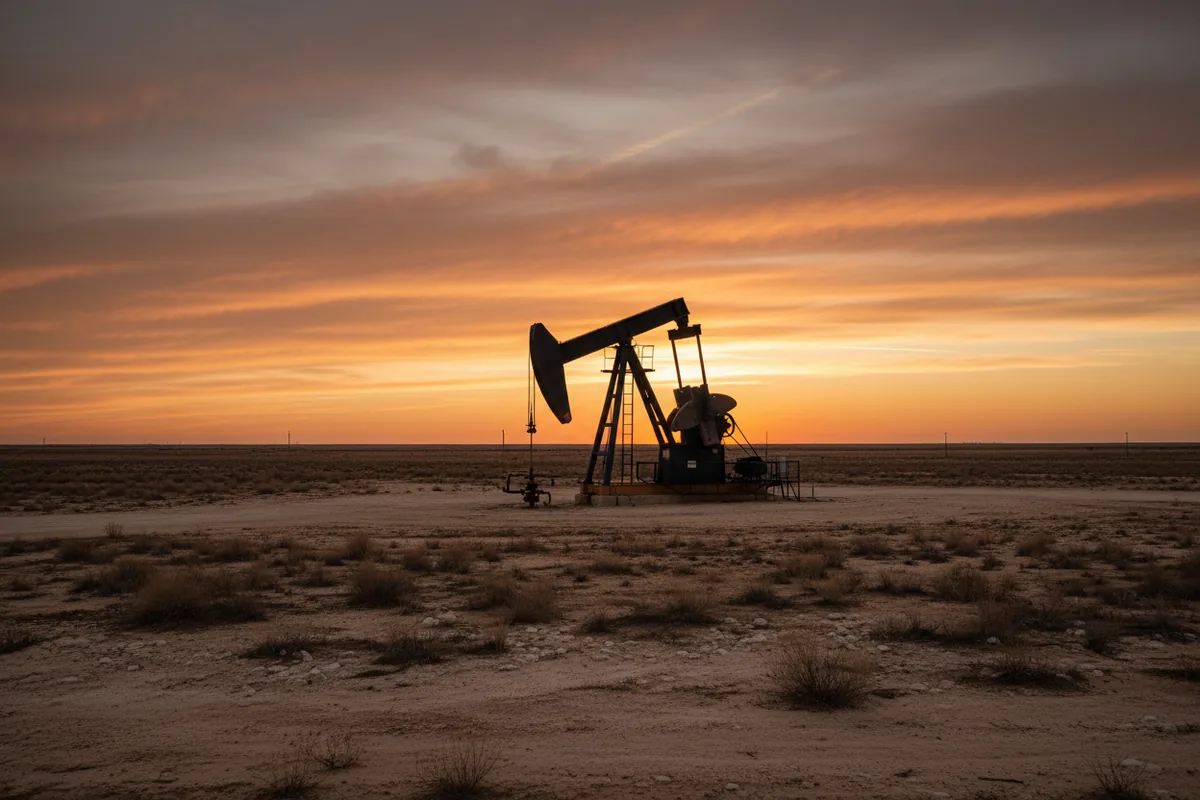
A solitary pump jack silhouetted against a rust-coloured dusk sky in scrubland.
Immediate answer

Answers to common oilfield injury questions: what 29 U.S.C. § 654(a) requires of covered employers, OSHA reporting rights, and why fault and deadlines vary by state.

On this page
  1. Who Can Be Held Responsible After an Oilfield Accident
  2. What Federal Safety Law Means for an Injury Claim — and What It Does Not Do
  3. How the Cause of an Oilfield Injury Shapes a Claim
  4. What Rights an Injured Worker Has Under Federal Law
  5. Why Fault Rules and Deadlines Differ Depending on Where You Were Hurt
  6. What Evidence Tends to Matter in an Oilfield Injury Case
  7. What a Claim Has to Show — and What That Depends On
  8. Frequently asked questions
  9. Sources

If you were hurt on an oilfield site, the honest answer to most of your questions is that it depends on who employed you, who else worked the site, how the injury happened, and which state's law applies. Federal safety law sets duties and protects reporting. State law decides most claims.

Most people facing an oilfield injury are trying to answer several hard questions at once. They may be off work with bills arriving, unsure whether reporting the injury could cost them a job, and unclear whether the company that hired them, the operator, or an equipment maker is answerable for what happened. A family that lost someone on a rig or a well pad carries those same questions, along with grief. This guide walks through the legal routes a claim can take, what federal safety law does and does not do, the rights OSHA describes, and why fault, deadlines and damages change from state to state.

Who Can Be Held Responsible After an Oilfield Accident

An oilfield injury can lead to more than one kind of legal claim, and the kind that fits depends on who employed the worker and how the injury happened.

The first is workers' compensation. This is a state-run system that pays medical and wage benefits whether or not anyone was at fault. In exchange, it typically bars a direct lawsuit against the worker's own employer. The second is third-party liability, meaning a claim against someone other than the direct employer, such as another contractor, an equipment manufacturer, or the owner of the property. In a third-party claim, fault has to be shown.

Two more legal theories often come up. Premises liability is the duty a landowner or site operator has to keep a worksite reasonably safe. Product liability is a claim that a defective piece of equipment or a defective tool caused the injury.

These distinctions matter on an oilfield because a single location often has several companies working on it at the same time. An operator may own the lease. A drilling contractor may run the rig, and service companies and subcontractors may bring their own crews and equipment. Each relationship affects who may be a proper defendant, meaning the party a claim can be brought against. The structure is covered further in our guide to oilfield contractor injuries.

For a worker, the legal route determines who can be sued, which losses the law may allow, and whether the workers' compensation bar applies. The facts of the specific case decide which theory fits: who controlled the work, who owned the equipment, and what went wrong. If you are sorting this out, a useful starting point is listing every company that was on the site and what each one did, which is one of the things a conversation with an attorney can help untangle.

What Federal Safety Law Means for an Injury Claim — and What It Does Not Do

Many injured workers assume that a safety violation settles the question of who pays. Federal law works differently. Under 29 U.S.C. § 654(a), each employer the Act covers "shall furnish to each of his employees employment and a place of employment which are free from recognized hazards that are causing or are likely to cause death or serious physical harm to his employees," and "shall comply with occupational safety and health standards promulgated under this chapter." OSHA calls the first duty the General Duty Clause. It applies to covered employers, not to every business, because the Act's own definition of an employer leaves some out.

A second provision shapes what that duty means for a worker's own case. Under 29 U.S.C. § 653(b)(4), nothing in the Act "shall be construed to supersede or in any manner affect any workmen's compensation law or to enlarge or diminish or affect in any other manner the common law or statutory rights, duties, or liabilities of employers and employees under any law with respect to injuries, diseases, or death of employees arising out of, or in the course of, employment."

For an injured worker, this means the federal safety law does not create an injury lawsuit, and it does not take one away. A violation of an OSHA standard does not by itself establish civil liability. As a general legal principle, though, a safety violation can be relevant evidence in a negligence claim, and how much weight it carries depends on the facts and on the state's law. If you know of an OSHA inspection or citation connected to the accident, that record may be worth noting, and how it fits a state-law claim is a question an attorney can help weigh.

This page covers onshore oilfield sites. Offshore platforms are governed by separate federal law that is not covered here.

How the Cause of an Oilfield Injury Shapes a Claim

If you are trying to understand what happened to you or to someone in your family, it can help to place the accident in a familiar category. The categories below describe how accidents of this kind can happen in general terms. None of them is a finding that anyone was at fault.

Struck-by and caught-in or caught-between incidents involve heavy equipment, moving pipe, and rotating machinery. Falls can happen from derricks, elevated platforms, and tanks, and OSHA's worker rights page lists a harness and lifeline for falls as an example of required safety equipment. Fires and explosions can involve flammable gases or a loss of well control. Vehicle and transportation incidents happen when crews drive between sites or work around heavy trucks, a subject covered in our guide to oilfield truck crashes. Exposure to hazardous chemicals can include hydrogen sulfide and drilling fluids, and OSHA lists protection from toxic chemicals among workers' rights. Equipment failure can also play a part, which is one reason OSHA names the right to "work on machines that are safe."

The category matters for a practical reason: the cause shapes which records exist, which companies were involved, and which legal theories may come into play. A fall from a derrick raises questions about fall protection and about who controlled the rig. A blowout raises questions about well-control equipment and procedures. A traumatic injury, including the kind discussed in our guide to oilfield brain injuries, can follow from almost any of these categories. For a worker or family, naming the cause is often the first step toward knowing which records to look for and which companies to ask about.

What Rights an Injured Worker Has Under Federal Law

Many injured workers are afraid that reporting what happened will cost them their job. OSHA addresses that fear directly. Its Worker Rights and Protections page states that "Federal law gives you the right to work in a safe place" and that workers can "speak up or report safety concerns without being punished or treated unfairly." The rights it lists include the right to report an injury or illness and get copies of medical records, to request an OSHA inspection and speak to the inspector, to review records of work-related injuries and illnesses, and to see the results of tests taken to find workplace hazards.

OSHA's File a Complaint page describes two kinds of complaints. A safety and health complaint reports unsafe or unhealthy conditions. OSHA says it can be filed online, by phone, by letter, or in person at a local OSHA office, in any language, anonymously, or by someone filing on the worker's behalf. OSHA also states that it "can not issue violations for safety and health incidents that occurred more than six months prior," and that "a signed complaint is more likely to result in an onsite inspection."

A whistleblower complaint covers retaliation. OSHA's worker rights page states, "It is illegal for an employer to fire, demote, transfer, or otherwise retaliate against a worker for complaining to OSHA." The same page says a whistleblower complaint can be filed "within 30 days of the retaliation." The complaint page describes the deadline as "30-180 days (deadlines vary with each statute)." OSHA adds that in states with OSHA-approved State Plans, employees may file with Federal OSHA and with the State Plan.

OSHA lists its toll-free number as 1-800-321-6742.

Why Fault Rules and Deadlines Differ Depending on Where You Were Hurt

The state where the injury happened sets most of the rules that decide an oilfield claim, including the deadline for filing, how fault is shared, and which losses the law allows.

A statute of limitations is the period within which a lawsuit must be filed. After it expires, a court will typically dismiss the claim. Limitation periods for personal injury claims vary by state, and no single period applies nationally. Wrongful death claims, brought by a worker's survivors when a workplace accident causes the worker's death, carry their own deadlines, which also vary by state. Our guide to fatal oilfield accidents covers these claims. Some states also have special rules for claims against certain kinds of defendants, and those rules can change the deadline.

Fault rules differ just as much. Comparative fault reduces an injured person's recovery by their own share of fault. Some states that use comparative fault bar recovery entirely once the injured person's share passes a set threshold. Contributory negligence is a stricter rule, still followed in a small number of states, that bars recovery if the injured person was at fault at all.

For a worker who wonders whether a moment of their own inattention ends everything, the state's fault rule is often the answer. The same facts can lead to different results in different states. Which rules apply to a specific claim, including the deadline, is a question a conversation with an attorney can help answer. Who may bring a claim is covered in our guide on who can bring a claim.

What Evidence Tends to Matter in an Oilfield Injury Case

An oilfield site can look different within days of an accident. Equipment is repaired or moved, a location is cleaned up, and crews rotate out. That affects which evidence remains available, and it is one reason families and workers often want to know which records exist.

The records that typically matter in these cases include:

  • medical records documenting the injury and the treatment that followed
  • incident reports filed by the employer or the operator
  • OSHA inspection records and citations, if any exist
  • photographs and video taken at the scene
  • maintenance and inspection logs for the equipment involved
  • employment records showing the worker's role, the worker's employer, and the contractors on site
  • the names and contact information of witnesses
  • the physical equipment, tool, or product involved, where it still exists

OSHA's worker rights page notes that workers can get copies of their medical records and review records of work-related injuries and illnesses. The same page describes a tool for checking an employer's OSHA inspection history.

If you were hurt, employment records and contractor information often matter more than people expect, because they show which company was responsible for which part of the work. If you would like to talk through the records from an oilfield accident and how they fit together, you may want to consider a case evaluation.

What a Claim Has to Show — and What That Depends On

A serious injury can feel like proof on its own, but the law does not treat it that way. An injury does not prove that anyone was at fault. For a worker or family, what can be recovered turns on specific showings, and each one depends on the facts.

In a negligence claim, the question generally comes down to four elements. Duty asks whether a company owed the worker a legal obligation; on an oilfield, an operator, a contractor, and an equipment manufacturer may each owe duties to workers. Breach asks whether that company failed to meet the duty. Causation asks whether that failure caused the injury. Damages are the losses the law may allow recovery for. The categories vary by state but typically include medical expenses, lost wages, and pain and suffering, and wrongful death claims may include additional categories.

If equipment failed, a product liability claim asks two questions: was there a defect, and did it cause the injury? The defect can be in design (how the product was designed), in manufacture (how a particular unit was made), or in warnings (the absence of adequate instructions or warnings). An accident does not prove a defect, and a defect does not prove that it caused the injury.

Damages rules, including any caps and the categories available, differ by state. Two accidents that look alike can come out very differently, depending on the evidence for each element and the law of the state where the accident happened. For someone weighing a claim, it can help to ask which element is likely to be disputed and which records speak to it, a question an attorney can help work through.

Free case evaluation

No Fee Unless We Win Your Case

A free case evaluation is how it starts. Tell us what happened, and we’ll help you understand your options. You pay no fee unless we win your case.

Oilfield Injury Claims Authority

How it works

  1. Call us or request a free case evaluationTell us what happened, in your own words.
  2. Talk through your caseYour options, and what your case may be worth.
  3. No fee unless we winYou pay no attorney fee unless we win your case.
Free case evaluation

Tell Us What Happened

Frequently asked questions

Can I sue my employer if I was hurt on an oilfield?

Workers' compensation typically bars a direct lawsuit against a worker's own employer, in exchange for benefits paid without regard to fault. That bar generally protects the direct employer, not the other companies on the site. Whether a claim against another party is available turns on who employed the worker, who owned the equipment, and who controlled the work. State law governs both systems.

What is the deadline to file an oilfield injury lawsuit?

State law sets the deadline, and it differs from state to state. A statute of limitations is the window for filing. When that window starts to run, and which exceptions apply, also depend on the state. A claim filed after the deadline is typically dismissed. That is why the location of the accident matters even before any other question.

What if I was partly at fault for my own accident?

The answer depends on the state's fault rule. Under comparative fault, a worker's recovery is reduced by their own share of fault, and some states bar recovery above a set threshold. A small number of states apply contributory negligence, which bars recovery if the worker was at fault at all. A worker's own mistake does not settle the question on its own.

Does an OSHA violation mean the company is automatically liable?

No. Under 29 U.S.C. § 653(b)(4), the federal safety law does not enlarge or diminish the rights, duties, or liabilities of employers and employees for workplace injuries. An OSHA citation does not by itself establish civil liability, although it may be relevant evidence in a negligence claim. Its weight depends on the facts and on the state's law.

Can I be fired for reporting an oilfield injury?

OSHA's worker rights page states that it is illegal for an employer to fire, demote, transfer, or otherwise retaliate against a worker for complaining to OSHA. Workers who believe they faced retaliation can file a whistleblower complaint. OSHA describes deadlines of 30 to 180 days, depending on the statute involved, so the timing of the retaliation matters.

What if defective equipment caused my injury?

A product liability claim against the maker, distributor, or seller of equipment is separate from any workers' compensation claim. It requires showing a defect in design, manufacture, or warnings, and showing that the defect caused the injury. A broken tool alone does not prove either point. That is why the equipment itself, where it still exists, is often central to these claims.

What damages can an injured oilfield worker recover?

State law sets the categories, and they vary. Personal injury claims commonly include medical expenses, lost wages, and pain and suffering. Wrongful death claims may include other categories, such as loss of support. What may be available depends on the facts, on the state's law, and on whether any caps apply.

Does this site cover offshore oilfield accidents?

No. This site covers onshore oilfield sites, such as well pads, drilling rigs on land, and related field operations. Offshore platforms are governed by separate federal law that is not covered here.

How does having multiple contractors on a worksite affect a claim?

A single site may involve an operator, a drilling contractor, service companies, and equipment suppliers, and each may be a separate legal entity. Those relationships shape who owed a duty to the worker and who may be named in a claim. Untangling which company controlled which part of the work is often one of the central tasks in these cases.

What should a family do after a fatal oilfield accident?

State law decides who may bring a wrongful death claim, often certain close family members, as well as which damages are available and the deadline for filing. Families commonly gather incident reports, OSHA records, and employment records. Because the rules vary so much by state, the state where the accident happened shapes nearly every answer.

Sources

Statutes, regulations and court sources

  1. 0129 U.S.C. § 654 — Duties of employers and employees (govinfo.gov) · GovInfo (U.S. Government Publishing Office)
  2. 0229 U.S.C. § 653 — Geographic applicability; workmen's compensation law unaffected (govinfo.gov) · GovInfo (U.S. Government Publishing Office)

Other sources

  1. 03Worker Rights and Protections (OSHA) · Occupational Safety and Health Administration
  2. 04File a Complaint (OSHA) · Occupational Safety and Health Administration