Skip to content

Hazards

High-Pressure Line Injury Lawyer: What a Claim Turns On

National · laws differ by state · Updated November 10, 2026

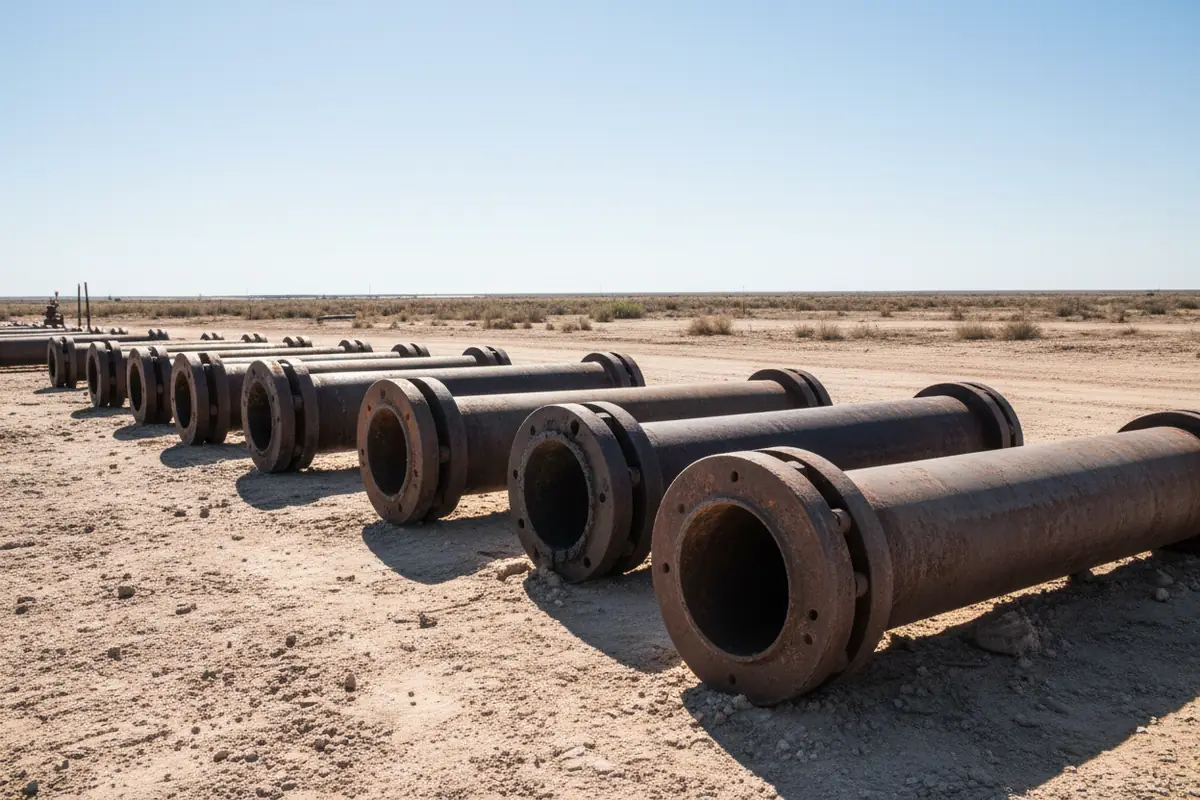
Heavy iron pipe and hammer-union fittings rest on dry caliche ground at a well site.
Immediate answer

When a pressure line, hose or fitting lets go at a well site: the facts a claim turns on, who may be answerable by type, the records that matter, and the federal duty.

On this page
  1. Key Takeaways
  2. Does Your Situation Fit What This Page Covers?
  3. How High-Pressure Releases Happen at Oilfield Sites
  4. Who May Be Answerable — and Why the Answer Is Not Always the Employer
  5. What the General Duty and the Lockout Standard Say — and Where They Apply
  6. Records That Matter When a High-Pressure Line Fails
  7. Injuries a High-Pressure Release Can Cause — and What Damages the Law May Allow
  8. How State Law Shapes What a Claim Looks Like
  9. Frequently asked questions
  10. Sources

When a high-pressure line, hose, connection or vessel lets go on an oilfield job, a claim usually turns on a few plain questions. Was the line rated for the pressure on it? Was it restrained? Was it inspected? Who set the pressure, and who was responsible for keeping people clear?

If you were the worker standing near that iron during a pressure test, flowback or a frac job, you may be dealing with an injury that looked small at first and turned out not to be. If someone in your family was killed, you may be trying to understand how a routine job ended that way. Most people facing this are carrying medical bills, missed paychecks and a company account of the event that may not match what the crew saw. Many are also unsure whether anyone beyond the employer could be answerable. This page walks through how these releases happen, who may be responsible by type, the records that tend to decide these cases, and why the state where it happened shapes the rest.

Key Takeaways

  • A pressure release case is usually built on details about the equipment and the job, not on the injury alone. The rating of the line, how it was tied down, its inspection history and the pressure chart often say more than any single witness.
  • Under 29 U.S.C. § 654(a), each employer the Act covers must provide a workplace free from recognized hazards that are causing or are likely to cause death or serious physical harm, and must comply with the safety standards issued under the Act. That duty belongs to covered employers, not to every business on a location.
  • The federal lockout standard, 29 C.F.R. § 1910.147, covers servicing and maintenance where a release of stored energy could injure employees, but its scope paragraph lists oil and gas well drilling and servicing among the work it does not cover.
  • No federal rule written specifically for pressure lines at well sites is stated on this page. That gap does not mean there is no duty; the general duty and ordinary state-law duties of care can still be in play.
  • The company that employed the injured worker is not always the only party involved. Operators, service companies, equipment makers, renters and maintenance contractors can each have a role.
  • A safety standard, or a missing one, does not by itself show that anyone was at fault. Fault depends on what actually happened.
  • Limitation periods, fault-sharing rules and damages rules differ from state to state, so the state where the release happened, and the facts, decide what applies.

Does Your Situation Fit What This Page Covers?

This page is about one kind of oilfield event: a worker struck, cut, burned or injected when a pressurized line, hose, connection or vessel failed. That includes a hose that whipped loose, a fitting or union that blew apart, a line that ruptured along its length, and fluid forced through the skin by a pinhole leak. It covers the operations where this tends to happen: pressure testing, flowback, hydraulic fracturing and pressure-pumping work.

The facts that usually matter are not a test anyone passes or fails. They are the questions the evidence will eventually answer:

  • whether the line, hose and connections were rated for the pressure actually applied;
  • whether the line was restrained or secured, and how;
  • whether it was inspected before the job, and by whom;
  • who set the operating or test pressure, and whether it went beyond what was planned;
  • who was responsible for keeping people out of the area while the line was pressured up.

If you were hurt, these questions probably sound familiar, because they are the same ones crews ask at the location afterward. What they mean for a claim is that the answer often sits in paperwork and in the failed part, not only in memory. Someone in your position might weigh which of these details they already know and which only the companies on location would have recorded.

Workers' compensation rules differ by state, and they can affect whether a civil lawsuit against the direct employer is available at all. Claims against companies other than the employer are a separate question under state law. Nothing on this page decides whether any particular person has a claim; that depends on the facts and the state. Injuries from a blowout, rather than a line or connection failure, are discussed on the page about well blowout injuries, and equipment failures in general are treated on their own page.

How High-Pressure Releases Happen at Oilfield Sites

Pressure testing is where many of these events begin. Lines, iron and vessels are pressured up to confirm they will hold. If something gives during the test, the energy stored in the fluid or gas comes out all at once, often at the weakest connection, and anyone inside the reach of the line is exposed.

Flowback and fracturing work keeps surface iron, hoses and connections under sustained high pressure, with fluid being pumped into a well or returning from it. Over a long job, a connection that was made up poorly, a worn component or a line that shifted can fail without much warning. Pressure-pumping equipment and its surface iron can fail at a fitting, at a connection or along the line itself.

A whipping hose is its own danger. A hose or line that comes loose under pressure, or that was never secured, can swing with enough force to kill a person in its path. Whether restraints were used, and whether they were the right kind for the job, often becomes a central question.

Then there is the injury that is easy to underestimate. A high-pressure injection injury happens when fluid is forced through the skin by pressure, sometimes through a tiny opening in a line or fitting. The entry mark can look like a small puncture while the damage beneath it is far more serious. If that happened to you, the gap between how it looked on location and what the medical records later show can matter a great deal.

The records of a release usually tell the story the crew cannot fully see in the moment. Pressure charts show what pressure was applied, when, and on whose instructions. Test logs show what was planned. Inspection records show what condition the equipment was in. Those records, and the failed part itself kept as it was, are among the things that matter most. People in this position often wonder who has those records now, and that question leads straight into who may be answerable.

Who May Be Answerable — and Why the Answer Is Not Always the Employer

A pressure job on a modern location usually involves several companies at once. The operator controls the well site and the overall operation. One contractor may be pumping, another testing, another supplying or renting iron, and another responsible for inspecting it. When a line fails, responsibility can follow the equipment and the decisions, not just the payroll.

The types of parties who may be involved include:

  • The operator, the company responsible for the well and the site, which may owe a duty as the party that controls the premises or directs the work. Responsibility based on control of a place is often called premises liability.
  • A service or pressure-pumping company, the contractor performing fracturing, cementing or pressure-testing work, which may be responsible for the equipment it brought and the procedures it followed.
  • An equipment manufacturer, where a line, hose, fitting or vessel may have been defective in its design or its manufacture. That kind of claim is called product liability. It asks whether a defect existed and whether it caused the injury; a failure, on its own, does not prove a defect.
  • An equipment renter or lessor, whose duties may depend on the rental agreement and the state's law.
  • A maintenance or inspection company, which may be answerable if its work on the equipment contributed to the failure.

Workers' compensation may be the only remedy against the direct employer in some states. Federal workplace safety law leaves that question alone: under 29 U.S.C. § 653(b)(4), the Act does not supersede or affect any workers' compensation law, and does not enlarge, diminish or otherwise affect the common-law or statutory rights, duties or liabilities of employers and employees for work injuries. That means a claim against a company other than the employer, often called a third-party claim, is decided by state law.

For an injured worker or a family, the practical meaning is that the list of who may be answerable is usually built from contracts, work orders, equipment ownership and rental records, and evidence of who gave which instructions. Someone in this position might weigh what they know about which company owned the iron, which crew rigged it up and who was running the pumps. A conversation with an attorney can cover how those relationships were set up on a particular job and what each one may mean under the state's law.

What the General Duty and the Lockout Standard Say — and Where They Apply

Federal workplace safety law reaches oilfield work in two ways that come up in pressure-release cases.

The first is the general duty. Under 29 U.S.C. § 654(a), each employer the Act covers shall furnish to each of its employees employment and a place of employment free from recognized hazards that are causing or are likely to cause death or serious physical harm, and shall comply with the occupational safety and health standards issued under the Act. The Occupational Safety and Health Administration describes this on its Worker Rights and Protections page as the General Duty Clause, which requires employers to keep their workplaces free of serious recognized hazards. For a worker hurt by a pressure line, this duty can matter even where no rule addresses that exact piece of equipment. It is worth noticing that the duty runs from a covered employer to its own employees, which is one reason the question of who employed whom on location comes up early.

The second is the lockout standard, 29 C.F.R. § 1910.147(a)(1). Its scope covers the servicing and maintenance of machines and equipment in which unexpected energization or start-up, or release of stored energy, could cause injury to employees, and it sets minimum performance requirements for controlling that hazardous energy. The same paragraph lists work it does not cover, including construction and agriculture employment, certain maritime employment, certain electric-utility installations, certain electrical hazards covered elsewhere, and oil and gas well drilling and servicing.

What this means for a well-site injury is that the lockout standard, by its own terms, excludes well drilling and servicing, while the general duty for covered employers still stands. Whether a particular task was well servicing, or something else, can itself depend on the facts. No federal regulation written specifically for pressure lines at well sites is set out here, and the absence of a specific rule does not erase other duties.

A standard also works in only one direction as evidence. The existence of a rule does not show that anyone broke it, and a rule's absence does not show that no one was careless. Fault in these cases turns on the specific facts: the equipment, the pressure, the restraints and the decisions made that day.

Records That Matter When a High-Pressure Line Fails

If you were hurt, the records that usually matter in a pressure-release case fall into a few groups, and each one answers a different question.

Pressure charts and test records show what pressure was applied, by whom and when. They speak directly to whether the line was rated for what it carried and whether the pressure went beyond the plan. Equipment inspection and maintenance logs show whether the line, hose or fitting was checked before the job and what condition it was in.

The failed part itself is often the single most important piece of evidence. Kept in the condition it was in at the time of the release, it can be examined for wear, damage, a manufacturing flaw or an assembly problem, which is often central to both a negligence claim and a product-liability claim. Once a part is cleaned, repaired, cut up or returned to a fleet, some of what it could show may be harder to establish.

Incident and investigation reports form another group: the employer's internal report, any OSHA inspection record and any report prepared by another company on location. OSHA's worker rights page lists, among workers' rights, the right to report an injury or illness and get copies of medical records, to review records of work-related injuries and illnesses, and to see results of tests taken to find workplace hazards.

Injured people and families also often keep medical records that document the injury and its treatment; photographs and video of the scene, the equipment and the injury taken close in time; the names and contact details of people present when the line let go; and contracts and work orders showing who owned, rented, maintained and controlled the equipment and the work.

Gathering records while recovering from an injury, or while grieving, is hard, and few people have all of this. Someone in this position might weigh which records they hold, which sit with the companies involved, and which may exist only as a chart in a data van. An attorney familiar with pressure-release cases can help identify which records tend to matter; a case evaluation is available when that conversation would be useful.

Federal law also addresses retaliation. Under 29 U.S.C. § 660(c), no person may discharge or discriminate against an employee for filing a complaint or exercising rights under the Act, and an employee who believes this happened may, within thirty days after the violation occurs, file a complaint with the Secretary of Labor.

Injuries a High-Pressure Release Can Cause — and What Damages the Law May Allow

The injuries that follow a pressure release tend to come from a few mechanisms. A whipping hose or a failed fitting can strike with enough force to break bones, cause internal injuries or kill. A worker can be caught or crushed by failing equipment or a line that moves suddenly. Hot fluid or steam released under pressure can burn. A high-pressure injection injury can leave damage under the skin that is not visible at the surface. Some of these releases are fatal, and families are left to piece together what happened from people who were standing elsewhere on location.

This page gives no medical advice, and the treatment any one injury requires is a matter for medical records, not for a legal page.

On the legal side, the law describes losses in categories rather than numbers. Depending on the state and the facts, the categories the law may allow include past and future medical expenses, lost wages and lost earning capacity, pain and suffering, and permanent impairment or disfigurement. Where a worker died, wrongful death is the name for a claim the law may give certain family members for the loss of that person; who may bring it, and what it covers, are set by state law.

For a person living with this injury, the real question is often about the future: work they may not be able to return to, care they may need. That is why medical records and work history matter so much to how damages are described. Whether any particular person may recover anything, and what, depends on the facts and the state's law. This page does not predict an outcome or suggest that a reader has a claim.

How State Law Shapes What a Claim Looks Like

Most of what decides a pressure-release case after the facts is state law, and the rules are not the same from one state to the next. No state's rule is the rule everywhere, and this national page states none.

A statute of limitations is the deadline set by law for filing a civil lawsuit. Each state sets its own periods, defines when the clock starts to run and sets its own exceptions. This page does not set out any state's deadline. A deadline is a reason to find out the rule that applies, not a guess to make from a general page.

Comparative fault is the name for rules about how responsibility is divided when more than one person or company, sometimes including the injured worker, may have contributed to an accident. States handle this differently, and the rule can change how a claim is valued or whether it can go forward. With several companies on one location, how fault is divided among them can matter as much as whether anyone was at fault.

Damages rules also vary, including limits on some categories of damages, who may bring a wrongful-death claim, and whether a claim the worker had survives for the estate. Workers' compensation rules vary too, and they can decide whether a civil claim against the employer is available, while claims against other companies are a separate question.

For an injured worker or a family, the state where the release happened is usually where these questions start. Someone in this position might weigh where the well was, which companies were involved, and when the injury happened, since those facts point to which state's rules may apply. A conversation with an attorney can cover how that state's deadlines, fault rules and damages rules fit the facts. For a broader look at how oilfield injury cases are structured, see the overview of oilfield accident legal services and the guide to OSHA and other agency records.

Free case evaluation

No Fee Unless We Win Your Case

A free case evaluation is how it starts. Tell us what happened, and we’ll help you understand your options. You pay no fee unless we win your case.

Oilfield Injury Claims Authority

How it works

  1. Call us or request a free case evaluationTell us what happened, in your own words.
  2. Talk through your caseYour options, and what your case may be worth.
  3. No fee unless we winYou pay no attorney fee unless we win your case.
Free case evaluation

Tell Us What Happened

Frequently asked questions

What does a high-pressure line injury claim turn on?

It usually turns on the equipment and the decisions around it: the line's rating against the pressure applied, how it was restrained, its inspection history, who set the pressure and who controlled the area. The injury shows harm; the records and the failed part show how it happened. A rule or standard alone does not establish fault.

Can a worker injured by a high-pressure release sue someone other than their employer?

Sometimes, depending on the state and the facts. Workers' compensation may be the only remedy against the direct employer in some states, but a claim against another company, such as a service company, an equipment manufacturer or an equipment renter, is a separate question decided by state law and by who did what on location.

What is a high-pressure injection injury and why is it serious?

It is an injury in which fluid is forced through the skin by pressure, sometimes through a pinhole leak. The mark at the surface can look small while the damage underneath is much greater. That gap between appearance and reality is why the medical records made afterward often matter so much in these cases.

Does the OSHA lockout/tagout standard apply to oilfield pressure work?

Its scope paragraph, 29 C.F.R. § 1910.147(a)(1), lists oil and gas well drilling and servicing among the work it does not cover. Whether a given task falls within that exclusion can depend on the facts. The general duty in 29 U.S.C. § 654(a) still applies to covered employers.

Who may be responsible when a pressure line fails at an oilfield site?

By type, the parties involved may include the well operator, a service or pressure-pumping company, the maker of the failed equipment, a company that rented or leased it, and a maintenance or inspection company. Which of them may be answerable depends on contracts, equipment records and who controlled the work.

What records matter most after a high-pressure line injury?

The records that usually matter include pressure charts and test records, inspection and maintenance logs, the failed part in its post-incident condition, incident and OSHA reports, medical records, photos and video, and the names of witnesses. Contracts and work orders often show who owned and controlled the equipment.

How long does a worker have to bring a claim after a high-pressure line injury?

Each state sets its own limitation periods, when they start to run and their exceptions, so no single answer applies nationally. This page states no period. Separately, 29 U.S.C. § 660(c) gives a thirty-day window, from the violation, for an employee's retaliation complaint to the Secretary of Labor.

What damages may be available in a high-pressure line injury case?

The categories the law may allow include past and future medical expenses, lost wages and earning capacity, pain and suffering, permanent impairment or disfigurement, and wrongful-death damages where a worker died. Which categories apply, and the rules for each, differ by state and depend on the facts.

Does the absence of a specific federal pressure-line regulation mean no duty exists?

No. Under 29 U.S.C. § 654(a), each employer the Act covers must provide a workplace free from recognized hazards likely to cause death or serious physical harm. State-law duties of care can also apply to the other companies on location, whether or not a specific rule exists.