Skip to content

Work settings

Pipeline Site Accident Lawyer: What Workers and Families Need to Know

National · laws differ by state · Updated November 10, 2026

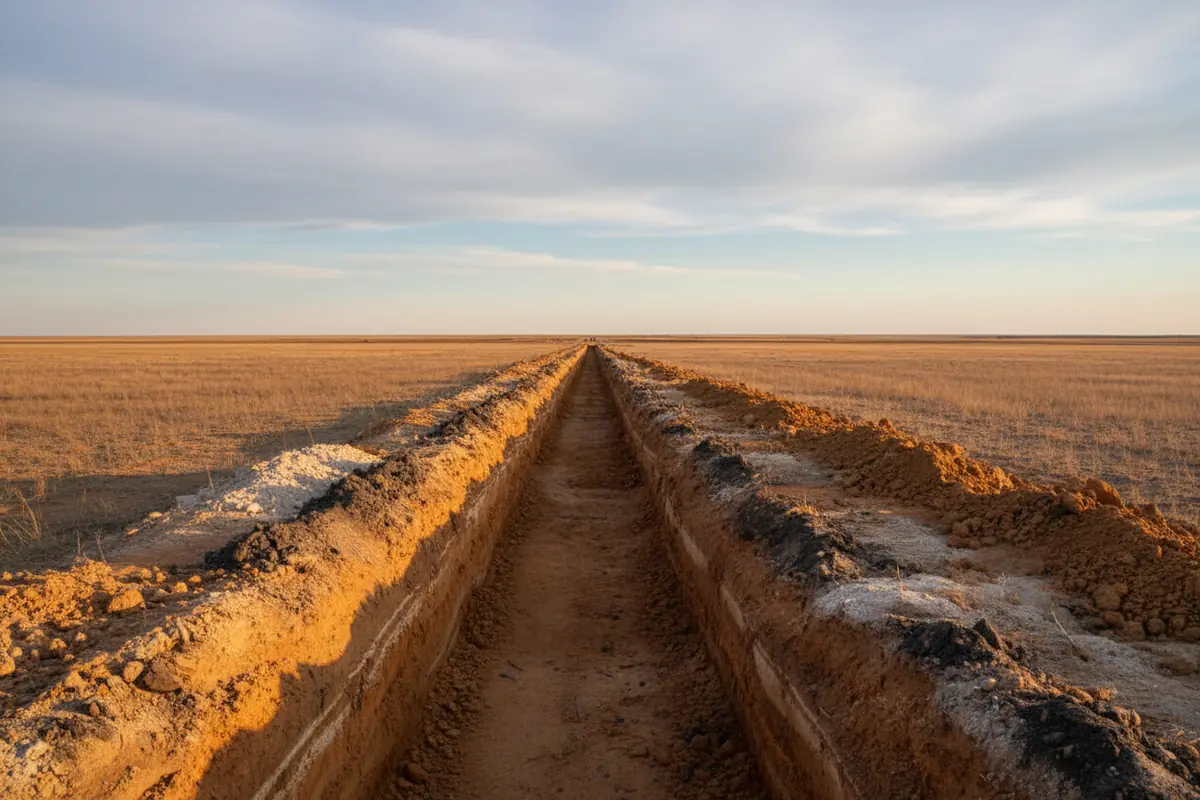
An open trench cuts through flat prairie soil at a construction worksite.
Immediate answer

Who may answer for a pipeline site injury, the four federal rules that create trench and incident records, and why state law sets deadlines and fault rules.

On this page
  1. Key Takeaways
  2. What Pipeline Site Work Involves and Why These Cases Are Different
  3. Federal Safety Rules That Apply to Pipeline Construction Sites
  4. How Your Pipeline Site Accident Happened, and Why It Shapes the Questions
  5. Who May Be Responsible for a Pipeline Site Injury
  6. Records That Can Show What Happened on Your Pipeline Site
  7. Injuries Pipeline Workers Sustain and What Damages Law May Allow
  8. Why Jurisdiction and State Law Matter for Your Claim
  9. Questions Worth Asking Before You Speak With an Attorney
  10. Frequently asked questions
  11. Sources

If you were hurt building or maintaining a pipeline, more than your own employer may be answerable. The pipeline's operator, the general or excavating contractor, another contractor on the right-of-way or an equipment maker may each have held safety duties. Federal rules also require records that often show what happened.

Most people searching for a pipeline accident lawyer are not doing research. They are a welder who was burned on a tie-in, a laborer pulled out of a trench, a hand struck by swinging pipe, or a spouse or parent sitting with a hospital bill or a death certificate and no clear account of what went wrong. The questions come fast: who was in charge of that site, whether anyone will explain what happened, how the bills and the lost paychecks get handled, and whether workers' compensation is the only path. This page walks through how pipeline site cases are usually put together, from the work itself to the federal rules, the parties, the records, the injuries and the state law that decides most of it.

Key Takeaways

A pipeline right-of-way is rarely one company's job site. The operator who owns or runs the line, the contractor building or repairing it, the crews digging and welding, and the companies that made the equipment can all be present at once, and each may have held a different piece of the safety picture.

  • Pipeline site work sits under overlapping federal safety duties. OSHA's excavation rules apply to employers, and PHMSA's incident-reporting rules apply to pipeline operators. Those duties belong to them, not to the injured worker.
  • Responsibility can extend past the direct employer. By type, the parties who may be answerable include the pipeline operator, the general contractor, an excavating or other subcontractor, and an equipment or tool manufacturer.
  • The same federal rules require paperwork. Trench inspections, incident notices and accident reports are records that may exist because a regulation required them, and they can shape what a claim is able to show.
  • Limitation periods, fault rules and damages rules differ by state. No single national deadline applies to a pipeline injury claim.
  • Workers' compensation rules also differ by state, and they can affect which other claims are available. This page does not set out any state's workers' compensation rule.

The practical point is that a pipeline injury case is often a question of mapping: who was on the site, who controlled what, and which records those duties produced. A conversation with an attorney can help sort out which duties applied on a particular spread and which parties held them.

What Pipeline Site Work Involves and Why These Cases Are Different

This page is about the work of putting pipe in the ground and keeping it there. That includes trenching and excavation for pipeline installation; pipe handling, stringing and welding; hydrostatic or pneumatic pressure testing of new or repaired pipe; and work on or near a live gas or hazardous-liquid line during construction or maintenance. Trenches dug on general building construction sites, outside pipeline work, are outside this page.

What sets these cases apart is the number of hands on one job. A typical spread can involve the pipeline's operator, a prime contractor, an excavating subcontractor, a welding crew, an inspection or testing company and equipment suppliers. Each may have held distinct safety duties, and those duties do not always line up neatly with who signed the injured worker's paycheck.

Two bodies of law usually run side by side. Federal regulations from OSHA and PHMSA set safety and reporting duties for employers and operators; those are obligations placed on the companies, not on the worker who was hurt. Civil claims, by contrast, are generally governed by state tort law. That includes negligence (a claim that someone owed a duty of care, breached it, and caused an injury and resulting harm), premises liability and product liability, each explained in the section on responsibility below. Workers' compensation is a separate system again, and its rules differ by state.

For someone recovering from a pipeline injury, this layering matters. If the only party in view is the direct employer, the picture may be incomplete. The question of which companies were present and what each was responsible for is a factual one, and it is often the first thing a conversation with an attorney can help lay out.

Federal Safety Rules That Apply to Pipeline Construction Sites

Four federal regulations do much of the work in pipeline site cases. Each describes what an employer or operator must do; none is a finding that anyone did anything wrong, and none sets a deadline for the injured person.

Protective systems in excavations come first. Under Section 1926.652(a)(1) of Title 29 of the Code of Federal Regulations, each employee in an excavation must be protected from cave-ins by an adequate protective system designed under the regulation's design provisions, except when the excavation is made entirely in stable rock, or is less than 5 feet deep and examination of the ground by a competent person provides no indication of a potential cave-in. For a worker hurt in a trench, this means the question of what protection was in place, and why, is a defined one. What may be worth weighing is how deep the trench was, what the soil was, and whether shoring, shielding or sloping was used.

Daily inspections come next. Section 1926.651(k)(1) of Title 29 of the Code of Federal Regulations requires a competent person to inspect excavations, adjacent areas and protective systems daily for evidence of possible cave-ins, failing protective systems, hazardous atmospheres or other hazardous conditions. The inspection is to happen before work starts and as needed through the shift, and after every rainstorm or other hazard-increasing occurrence; these inspections are required only when employee exposure can be reasonably anticipated. Under paragraph (k)(2) of the same section, when the competent person finds such evidence, exposed employees are to be removed from the hazardous area until the necessary precautions are taken. For an injured worker, this means someone may have been designated to look at that trench that day. The thing to weigh is who that person was and whether a written record of the inspection exists.

Operators carry reporting duties. Under Section 191.5(a) of Title 49 of the Code of Federal Regulations, at the earliest practicable moment following discovery, but no later than one hour after confirmed discovery, each operator must give notice of each incident as the regulation defines it. That means a gas line incident may have generated an official notice within hours. A family may want to consider whether such a notice was made and what it said.

For hazardous liquid lines, Section 195.50 of Title 49 of the Code of Federal Regulations requires an accident report for each failure in a covered pipeline system with a release of the hazardous liquid or carbon dioxide that results in any of several events, including an explosion or fire not intentionally set by the operator, the death of any person, or a personal injury necessitating hospitalization; certain releases and property damage above a stated amount also qualify. A hospitalization or death on a liquid line may therefore appear in a report the operator was required to file. Whether that report exists is a reasonable early question.

PHMSA's Pipeline Incident 20 Year Trends page states that "PHMSA has collected pipeline incident reports since 1970" and that "Serious Incidents include a fatality or injury requiring in-patient hospitalization." Separately, OSHA's Worker Rights and Protections page states that federal law gives workers the right to a safe workplace, to report an injury and get copies of their medical records, and to review records of work-related injuries and illnesses. It also states that a worker who believes an employer retaliated for using OSHA rights can file a whistleblower complaint within 30 days of the retaliation.

How Your Pipeline Site Accident Happened, and Why It Shapes the Questions

The mechanism of an injury often points toward whose duty is at issue. A trench collapse raises different questions than a weld burn, and a pressure-test failure involves different parties than a dozer striking a worker.

Trench and excavation collapses are the clearest example. When walls give way on a crew laying pipe, the questions run straight back to the protective-system and inspection duties described above: what system was used, whether the ground was examined, and what the daily inspection recorded.

If you were struck by pipe or caught between equipment, the heavy work of moving pipe is usually where the questions start. Sidebooms, excavators, rigging, slings and stacked joints can strike a worker or pin one against a trench wall or another piece of pipe. For someone hurt this way, the people worth identifying may include the operator of the machine, the contractor directing the lift, and sometimes the maker of a component that failed.

If you were burned or hurt during hot work or testing, the setting matters just as much. Welding, cutting and other hot work can cause burns, arc flash injuries and harm from fumes. Pressure testing, whether hydrostatic or pneumatic, puts new or repaired pipe under load, and a failure during testing can injure people nearby, so a worker standing near the test, not only the one running it, may be affected. Work on or near a live gas or hazardous-liquid line during construction or maintenance carries its own risks, including contact with the line and fire or explosion, and may bring the operator's reporting duties into view. Falls into open excavations, or from elevated work areas along the right-of-way, round out the common patterns.

None of these events, on its own, establishes that anyone was at fault or that any equipment was defective. What it does is frame the questions. If you are trying to understand your own accident, the sequence of events, the equipment in use and the conditions at the moment it happened are the facts that usually matter most.

Who May Be Responsible for a Pipeline Site Injury

Many injured workers reasonably assume that their employer is the only party involved. On a pipeline job, that is often not the full picture, and the legal theory can differ for each type of party.

The pipeline operator is the company that runs the line. It carries the federal reporting duties described above, and depending on the state's law and who controlled the right-of-way, it may be examined under premises liability, the rule that a landowner or party in control of a site owes a duty to keep it reasonably safe, as well as under ordinary negligence.

The general or prime contractor usually coordinates the overall work on a spread. Whether it held a safety duty toward a particular subcontractor's worker, and what that duty covered, depends on the contracts, the actual control it exercised on site and the state's law.

An excavating or other subcontractor is often the direct employer of the crew in the trench, and the OSHA excavation duties described above fall on employers. Another subcontractor working alongside, such as a welding, testing or inspection company, may have held its own duties toward workers it did not employ.

An equipment or tool manufacturer may be examined under product liability, which is liability for a defective product that causes injury, whether the defect is in the product's design, its manufacture, or its warnings and instructions. A failed boom, a trench shield, a test fitting or a welding component could raise that question. A failure alone does not prove a defect; the law asks whether there was a defect and whether it caused the injury.

Whether any of these parties is responsible depends on the facts of the specific incident and the state's law. On a multi-employer site, more than one party may have contributed, and a conversation with an attorney can help sort out which parties held which duties.

Records That Can Show What Happened on Your Pipeline Site

Pipeline sites generate paper, much of it because a regulation required it. If you were hurt, the records that usually matter fall into a few groups.

Operator reports and excavation records come first. These are the gas incident notices, liquid accident reports and daily trench inspections described in the federal rules section above, along with soil classifications and protective-system choices that may appear in logs, checklists or competent-person notes.

Equipment records are a third group. Maintenance, inspection and certification records for sidebooms, excavators, rigging, shields and testing equipment can show the condition of what was in use.

Company paperwork matters as well. Incident and accident reports prepared by the employer or the operator, contractor agreements and subcontracts, and site safety plans can show who agreed to control what.

Personal records round out the picture. Medical records document the injury and the treatment. Photographs and video of the site, the trench, the equipment and the conditions that day can capture what reports leave out. Injured workers and families often keep the names and contact information of coworkers and others who saw what happened.

Some records are time-sensitive in the ordinary sense that sites change, trenches are backfilled and equipment is repaired or moved. Knowing which records exist, who holds them and how they connect to each party's duty is often where a claim begins to take shape.

Injuries Pipeline Workers Sustain and What Damages Law May Allow

The injuries on pipeline sites are often severe because of the forces involved: tons of soil, heavy pipe, pressurized lines and open flame. For a worker or family, the kind of injury often traces back to how it happened. Crush injuries and other traumatic injuries can follow a trench collapse, which ties back to the trench protection and inspection questions. Burns can come from welding, hot work or contact with a live line. Traumatic brain injury, spinal cord injury and amputation occur in struck-by, caught-between and fall incidents, and injuries like these can mean long treatment and time away from work. Some of these accidents are fatal.

When a worker dies, the family may face a wrongful death claim, which is a civil claim brought by surviving family members when a person dies as a result of another party's wrongful act or negligence. Who may bring it, and what it may include, differ by state.

In civil claims against a party other than the employer, the categories of damages the law may allow generally include past and future medical expenses, lost wages and lost earning capacity, pain and suffering, and, where a death occurred, wrongful death damages for the family. Which categories apply, and in what form, depend on the injury's severity and permanence, whether a death occurred, the facts of the accident and the law of the state where it happened. Damages rules, including any limits a state places on them, differ from state to state.

Nothing about a particular injury tells anyone what a claim may involve. For a family trying to plan around months of treatment or the loss of a wage earner, the more useful question is which categories the governing state's law recognizes and what the records show about the injury and its effect on work and daily life.

Why Jurisdiction and State Law Matter for Your Claim

The state where the accident happened usually decides the rules that matter most. The federal regulations on this page set safety and reporting duties; whether a violation of one supports a civil negligence claim, and how much weight it carries, depends on the state's law.

A statute of limitations is the deadline for filing a civil claim, and limitation periods differ by state. When the period starts to run and what exceptions apply are set by each state's law. This page does not state any state's deadline, and no single national deadline applies.

Fault rules also differ. Under comparative fault, a rule many states use in some form, a plaintiff's recovery may be reduced in proportion to their own share of fault; other states follow different approaches, including contributory fault. Damages rules and wrongful death rules vary as well, and no state's rule is the rule everywhere.

Workers' compensation adds another layer. Its rules differ by state and can affect whether, and how, a civil claim against a party other than the direct employer may be brought.

For a worker or family, this is where the details stop being abstract: the governing state shapes the deadline, how fault is divided and which damages categories exist. If those questions are open for you, a case evaluation is one way to talk through which state's rules apply to the accident and how its deadlines and fault rules are framed.

Questions Worth Asking Before You Speak With an Attorney

A case evaluation goes further when the basic facts are in view. These are questions a person in this position may want to think through beforehand, not a checklist anyone has to complete.

  • What work was being done when it happened: trenching, pipe handling, welding, pressure testing, or work on or near a live line?
  • Who was the direct employer, and who operated the pipeline or controlled the site?
  • What other contractors were working on the spread that day?
  • What equipment or tools were involved, and what happened to them afterward?
  • Was an incident or accident report prepared by the employer or the operator, and does anyone have a copy?
  • What records are already at hand, such as medical records, photographs or video, and the names of coworkers who saw it?
  • Has a workers' compensation claim been filed, or is one pending?

Not every answer will be known, and that is common. A case evaluation is a conversation about what happened: the work setting, the parties present and the order of events. Gaps in the picture are part of what that conversation is for.

Free case evaluation

No Fee Unless We Win Your Case

A free case evaluation is how it starts. Tell us what happened, and we’ll help you understand your options. You pay no fee unless we win your case.

Oilfield Injury Claims Authority

How it works

  1. Call us or request a free case evaluationTell us what happened, in your own words.
  2. Talk through your caseYour options, and what your case may be worth.
  3. No fee unless we winYou pay no attorney fee unless we win your case.
Free case evaluation

Tell Us What Happened

Frequently asked questions

Who can be held responsible for a pipeline construction site accident?

By type, the pipeline operator, the general contractor, an excavating or other subcontractor, or an equipment manufacturer may be answerable, depending on who held the relevant safety duty and how the accident happened. On a site with several companies, contracts and actual control on the ground often decide who held which duty. Whether any party is responsible depends on the facts and the state's law.

What federal safety rules apply to pipeline excavation work?

Section 1926.652(a)(1) of Title 29 of the Code of Federal Regulations requires adequate protective systems against cave-ins, with limited exceptions for stable rock and shallow excavations. Section 1926.651(k)(1) requires daily inspections by a competent person. These are employers' duties; whether a violation supports a civil claim depends on state law.

What is the deadline to file a pipeline injury claim?

Statutes of limitations differ by state, and no single national deadline applies. Each state's law defines when the period starts and what exceptions exist. The federal reporting deadlines on this page are operators' duties, not the injured person's filing deadline.

Does workers' compensation affect a pipeline injury claim?

It can. Workers' compensation rules differ by state and may affect which claims against other parties are available alongside it. How the two interact depends on the state where the accident happened and the specific facts.

What records are typically relevant in a pipeline site injury case?

Operator incident notices and accident reports, daily excavation inspection records, equipment maintenance and certification records, employer incident reports, contractor agreements and safety plans, medical records, photographs and video, and witness names. Several of these exist because a federal regulation required them.

What does PHMSA require a pipeline operator to report after an accident?

Section 191.5(a) of Title 49 of the Code of Federal Regulations requires notice of an incident at the earliest practicable moment after discovery, no later than one hour after confirmed discovery. Section 195.50 requires accident reports for listed events, including a death, an injury needing hospitalization, or a fire or explosion not intentionally set. These are reporting duties, not findings of fault.

Can a pipeline worker sue a party other than their direct employer?

Depending on the state, a worker may be able to bring a civil claim against a third party, such as the pipeline operator, another contractor or an equipment manufacturer, whose negligence or defective product contributed to the injury. Whether that avenue is open depends on the state's workers' compensation law and the facts.

What types of injuries occur in pipeline construction accidents?

Crush and traumatic injuries from trench collapse, burns from welding or live-line contact, traumatic brain injury, spinal cord injury, amputation and death. The injury's severity and permanence, and whether a death occurred, affect which damages categories the governing state's law may allow.

What is a case evaluation for a pipeline injury claim?

It is a conversation with an attorney about what happened: the work being done, the companies involved, the order of events and the records that exist. It is not a promise to take the matter and not a prediction of any outcome.

Sources

Statutes, regulations and court sources

  1. 0129 C.F.R. § 1926.652, Requirements for protective systems (eCFR) · Electronic Code of Federal Regulations
  2. 0229 C.F.R. § 1926.651, Specific excavation requirements (eCFR) · Electronic Code of Federal Regulations
  3. 0349 C.F.R. § 191.5, Immediate notice of certain incidents (eCFR) · Electronic Code of Federal Regulations
  4. 0449 C.F.R. § 195.50, Reporting accidents (eCFR) · Electronic Code of Federal Regulations

Other sources

  1. 05Pipeline Incident 20 Year Trends, Pipeline and Hazardous Materials Safety Administration · phmsa.dot.gov
  2. 06Worker Rights and Protections, Occupational Safety and Health Administration · Occupational Safety and Health Administration