Skip to content

Claim issues

Third-Party Liability in Oilfield Injury Cases

National · laws differ by state · Updated November 11, 2026

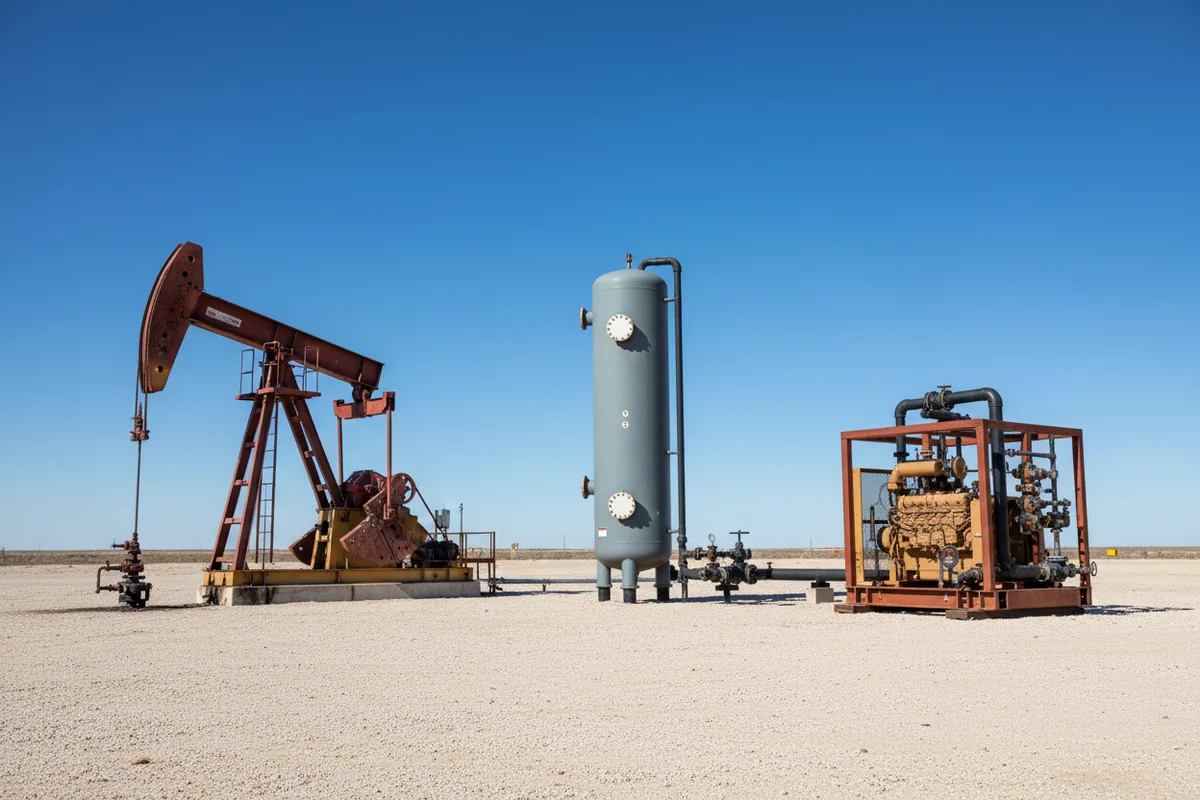
Three separate oilfield equipment units on a flat production pad under a clear midday sky.
Immediate answer

When a company other than the employer may answer for an oilfield injury: who that can be, what a claim must show, and how state fault rules differ.

On this page
  1. What Third-Party Liability Means in an Oilfield Injury
  2. Who May Be Responsible Beyond Your Employer
  3. What a Third-Party Claim Has to Show
  4. How Your Share of Fault Can Affect a Third-Party Claim
  5. Deadlines and Damages: What State Law Decides
  6. What the Records in an Oilfield Injury Case Often Show
  7. Frequently asked questions
  8. Sources

If you were hurt on an oilfield job, a company other than your employer may also be legally responsible. That can include the operator, another contractor, an equipment maker or renter, or a driver. A claim against that company is separate from workers' compensation, and whether it exists depends on the facts and state law.

Most people facing this question have already filed for workers' compensation, or have heard about it from a supervisor, and are wondering whether that is the only path. Maybe the accident happened around equipment your employer did not own, on a lease another company ran, or beside a crew from a different outfit. If a family member was badly hurt or killed, you may be trying to understand who had control of the work that day, and whether the answer changes anything. This page walks through what a third-party claim is, who it can involve, what it has to show, and how state rules shape it.

What Third-Party Liability Means in an Oilfield Injury

A third party, in this setting, is a person or company other than the injured worker's direct employer. Third-party liability is the legal responsibility that person or company may have for an injury, under ordinary injury law rather than workers' compensation.

These are two separate legal tracks. Workers' compensation is a benefits system tied to the employment relationship. A third-party claim is a tort claim, meaning a civil claim that someone's wrongful conduct caused harm, brought against an outside company. Workers' compensation rules differ from state to state, and this page does not state any state's workers' compensation rule.

Federal safety law leaves that system alone. Under 29 U.S.C. § 653(b)(4), the Occupational Safety and Health Act is not to "be construed to supersede or in any manner affect any workmen's compensation law or to enlarge or diminish or affect in any other manner the common law or statutory rights, duties, or liabilities of employers and employees under any law with respect to injuries, diseases, or death of employees arising out of, or in the course of, employment." OSHA's worker rights page describes separate safety rights, including the right to report an injury or illness and get copies of your medical records.

For someone already receiving workers' compensation, this means that benefits on one track do not by themselves close the other. The site's comparison guide sets the two tracks side by side; this page stays with the third-party path. The first question a person in this position may weigh is whether anyone besides the employer had a hand in the work, the site or the equipment.

Who May Be Responsible Beyond Your Employer

On a well site, several companies often work side by side, and each one controls or supplies something different. Who may answer for an injury turns on that role, not on a company's name.

The well operator or lease operator typically controls the site and directs the overall work. That role can raise questions of premises liability, the legal duty a person or company that controls a property or worksite owes to people on it. A co-contractor or subcontractor controls its own crew, its own methods and sometimes its own section of the job; questions about its conduct are usually framed as negligence. Workers hurt while employed by a contractor on another company's site face their own set of questions, covered on the page about oilfield contractor injuries.

An equipment manufacturer designs and builds tools, rigs, valves and other gear. That raises products liability, the legal responsibility of a manufacturer, distributor or seller for harm caused by a defective product. An equipment rental company supplies gear and may have maintained or inspected it. A transportation company or driver moves crews, water, sand or equipment to and from the site.

The same accident may involve more than one third party, each under a different legal theory, so overlooking one company can mean overlooking a separate claim. A family thinking about this stage may weigh which companies were present that day, what each one controlled or supplied, and how they were connected. Sorting out which of those roles may carry a duty is the kind of question a conversation with an attorney can help untangle.

What a Third-Party Claim Has to Show

A negligence claim against a third party rests on four elements. Duty means the company owed the worker a legal obligation of reasonable care. Breach means it fell short of that care. Causation means the shortfall actually caused the injury. Damages means real loss resulted, such as medical bills or lost work.

If a tool, valve or rig part failed, a products liability claim works differently. It generally has to show that the product had a defect and that the defect caused the harm, not merely that you were hurt while using it.

An injury does not prove anyone's fault, and an accident does not prove a defect. A blowout, a fall from a rig floor or a burn tells you something went wrong; it does not, on its own, say who is legally responsible. That can feel unfair when you are the one living with the injury, but it is how the law sorts responsibility.

If you were hurt, the records that usually bear on these elements include incident reports, equipment records, maintenance logs, photographs, the names of people who saw what happened, and medical records. Each speaks to a different element: maintenance logs to breach, medical records to damages, witness accounts to causation. A claim is weighed element by element, and some people at this point want to understand which element may be hardest to show in their situation, a fair question to bring to a conversation with our attorney.

How Your Share of Fault Can Affect a Third-Party Claim

Many injured workers worry that something they did, or did not do, will count against them. Whether it does, and how much, depends on the fault rule of the state whose law applies, and states use different rules.

Comparative fault is a rule that reduces an injured person's recovery by their own percentage of fault. Contributory negligence is a different rule, under which an injured person who bears a share of fault may be barred from recovery altogether. These are different legal doctrines, not two names for the same thing.

Washington's rule is one example of pure comparative fault. Section 4.22.005 of the Revised Code of Washington provides that in an action based on fault, "any contributory fault chargeable to the claimant diminishes proportionately the amount awarded as compensatory damages for an injury attributable to the claimant's contributory fault, but does not bar recovery." That is Washington's rule only.

Texas uses a modified comparative fault rule. Under section 33.001 of the Texas Civil Practice and Remedies Code, in an action the chapter covers, "a claimant may not recover damages if his percentage of responsibility is greater than 50 percent." If the claimant is not barred, section 33.012 of the same code reduces the damages by the claimant's percentage of responsibility. That is Texas's rule only.

Virginia follows contributory negligence. In Albritton v. Commonwealth of Virginia, a February 4, 2021 opinion, the Supreme Court of Virginia described contributory negligence, "when proven," as "an absolute bar." That is Virginia's rule only.

The same share of fault could reduce a recovery in one state and end it in another, so which state's rule applies can matter as much as what happened. That depends on where the injury occurred and other facts, and a conversation with our attorney can help clarify which state's rules may be in play.

Deadlines and Damages: What State Law Decides

A statute of limitations is the period within which a lawsuit must be filed; after it runs, the right to sue is generally lost, whatever the merits. Limitation periods differ by state and can differ by the type of claim, and this page does not state any specific state's deadline. A deadline means only what the statute that sets it says, including when it starts and any exceptions, so this page cannot tell anyone how much time they have or whether a deadline has passed. The practical consequence is that a strong claim can still be lost to timing alone.

If a family member died, a wrongful death claim may be available to surviving family members when a person dies as a result of another's wrongful act. Who may bring that claim and what it may include also differ from state to state.

The kinds of loss the law may allow are usually described in broad categories. Economic losses include medical expenses and lost earnings. Non-economic losses include pain and suffering. Wrongful-death claims may allow categories tied to what surviving family members lost. Nothing here says what a claim may produce. The page on how an oilfield injury claim can end describes the possible endings without predicting any.

For a family dealing with medical bills or the loss of a paycheck, this is often the hardest part to hold in mind. The applicable deadline and damages rules are among the first things a conversation with an attorney would address.

What the Records in an Oilfield Injury Case Often Show

If you were hurt, each record in a third-party case tells part of what happened to you. Incident and investigation reports show what the companies recorded about your accident. Equipment maintenance and inspection records show who serviced the gear involved and when. Contracts between the operator and its contractors often show who was responsible for which part of the job, which bears on duty.

Product documentation, such as manuals, labels and warnings, bears on whether a product was defective. Photographs and video can show the scene, the equipment and the conditions. Witness information points to who saw what happened. Medical records connect the injury to the event and show its extent. OSHA's records, along with those of other agencies, have their own limits; the guide to oilfield injury records and resources explains what they can and cannot do.

Many of these records are held by the operator, a contractor or a manufacturer, not by the injured worker. That means the documentation bearing on a claim may sit largely in other companies' files, and what an injured worker can show depends in part on what those files contain. Where the equipment itself is at the center, the page on defective oilfield equipment explains a maker's responsibility.

What the records show, and who holds them, is part of what an early conversation can help clarify. If that would be useful, you can request a case evaluation to talk it through.

Free case evaluation

No Fee Unless We Win Your Case

A free case evaluation is how it starts. Tell us what happened, and we’ll help you understand your options. You pay no fee unless we win your case.

Oilfield Injury Claims Authority

How it works

  1. Call us or request a free case evaluationTell us what happened, in your own words.
  2. Talk through your caseYour options, and what your case may be worth.
  3. No fee unless we winYou pay no attorney fee unless we win your case.
Free case evaluation

Tell Us What Happened

Frequently asked questions

What is a third-party claim in an oilfield injury case?

It is a claim against a company or person other than the injured worker's direct employer, such as the operator, another contractor, an equipment maker or renter, or a driver. It follows ordinary injury law, not workers' compensation rules, and it depends on showing duty, breach, causation and damages, or a defect and causation.

Can an oilfield worker file a third-party claim and receive workers' compensation at the same time?

The two are separate legal tracks, and federal safety law, under 29 U.S.C. § 653(b)(4), does not change workers' compensation law. Whether both proceed together, and how a result on one affects the other, depends on the state's law. No single answer fits every state.

Who can be a third party in an oilfield injury case?

Anyone other than the direct employer whose role touched the injury: the operator that controlled the site, a contractor that controlled its own crew, a maker or renter that supplied equipment, or a driver moving people or loads. Each is described by what it controlled or supplied, and each may fall under a different theory.

Does a worker's own fault affect a third-party oilfield injury claim?

It can, depending on the state. Washington's statute reduces but does not bar recovery. Texas's statute bars recovery above 50 percent responsibility. Virginia's highest court described contributory negligence, when proven, as an absolute bar. These are three states' rules, not a rule for everywhere.

How long does an injured oilfield worker have to file a third-party claim?

The deadline, called a statute of limitations, differs by state and by the type of claim, and this page states no specific deadline. Missing it can end a claim regardless of its merits. When it starts and any exceptions come from the governing statute's own text.

What damages can a third-party oilfield injury claim seek?

The law may allow economic losses such as medical expenses and lost earnings, and non-economic losses such as pain and suffering. A wrongful death claim may allow categories for surviving family members. Which apply depends on the facts and the state's law, and none is assured.