Skip to content

Claim issues

Evidence Preservation After an Oilfield Accident: What Disappears, Who Holds It, and What a Lawyer Can Do

National · laws differ by state · Updated November 11, 2026

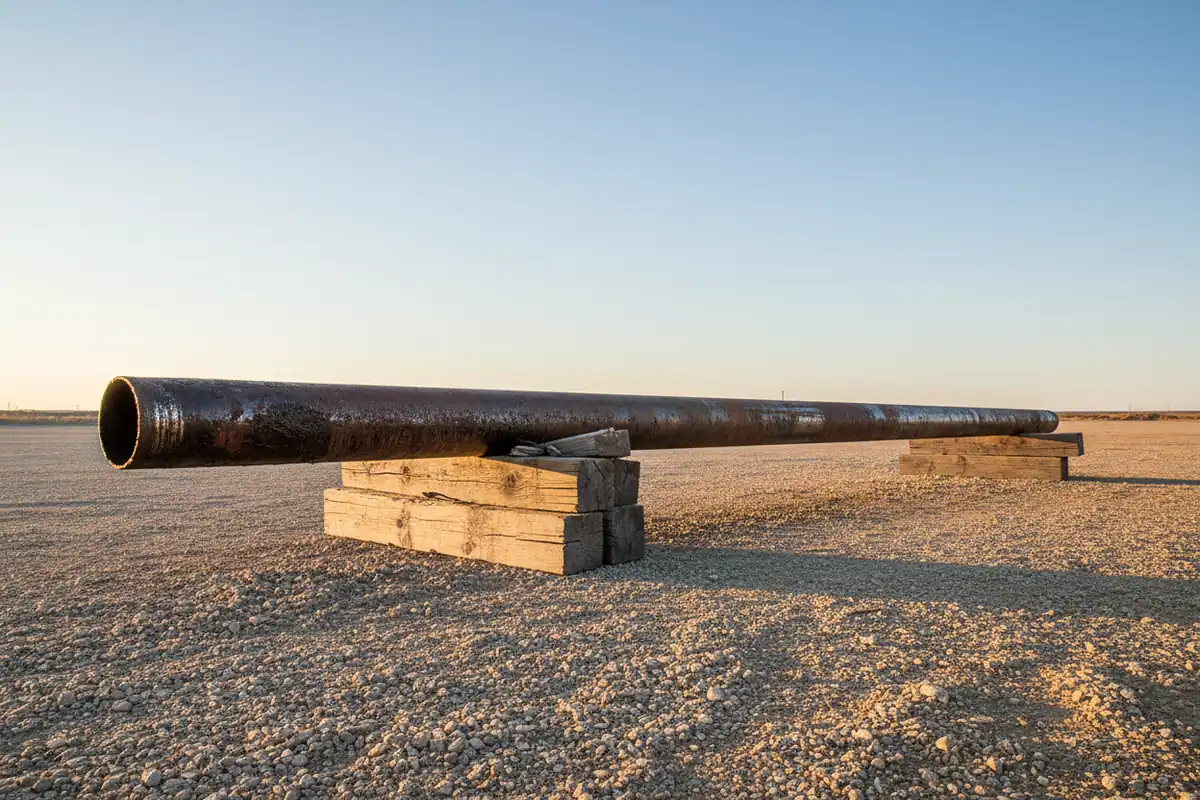
A weathered length of drill pipe resting on wooden cribbing in a gravel yard.
Immediate answer

Oilfield accident evidence can be repaired, scrapped or overwritten. See who holds it, what a preservation demand asks, and why spoliation rules vary by state.

On this page
  1. Why Keeping Evidence Matters to Your Oilfield Accident Claim
  2. What Evidence Can Disappear After an Oilfield Accident
  3. Who Usually Controls the Evidence — and Why That Matters for Your Claim
  4. How a Lawyer May Ask Companies to Keep Evidence
  5. What If the Evidence Is Already Gone? Spoliation Explained
  6. Records Outside the Companies' Control: OSHA and the CSB
  7. Questions Worth Asking Before Evidence Slips Away
  8. Frequently asked questions
  9. Sources

After an oilfield accident, the most important evidence usually sits with other people. The operator, the contractors and the rental companies hold the failed equipment, the logs and the reports. Some of it can be repaired, cleaned up or overwritten in the normal course of business. A lawyer may send those parties a written demand asking them to keep it.

Most people facing this question are still in the hospital, at home recovering, or planning a funeral. Meanwhile the rig, the pad or the plant is already back at work. If you were hurt, or someone in your family was hurt or killed, you may be wondering whether the valve that failed still exists, whether anyone saved the data, and whether it matters that you were not there when the cleanup happened. This page explains what tends to disappear, who usually controls it, and how the law treats evidence that goes missing.

Why Keeping Evidence Matters to Your Oilfield Accident Claim

Evidence preservation means identifying the physical items, documents and electronic data that could show what happened, and keeping them from being destroyed, altered or lost before a claim is resolved. It covers a cracked fitting and a pressure chart, and also a supervisor's text message or a sensor's recorded readings.

Oilfield work makes this concern sharper than in many other cases. Equipment on a well site is often rented and can be returned, repaired or scrapped once the job moves on. A location may be cleaned and put back into service. Drilling logs, sensor feeds and safety-system records may be kept on systems that write new data over old data on a schedule.

For an injured worker or a family, the stake is simple. Once a part has been rebuilt or a record overwritten, it may no longer be possible to show what failed, who knew about it, or what conditions looked like that day. A claim depends on what can be shown.

This page is about the legal side of keeping evidence. The documents and evidence guide explains which records tend to matter most in an oilfield claim, and the preserving records guide covers keeping your own papers, photos and belongings.

What Evidence Can Disappear After an Oilfield Accident

Each category below is a window into the accident, and each one can close in a different way.

Physical equipment includes failed or damaged tools, valves, blowout preventers, pressure gauges, and the personal protective equipment the worker was wearing. Once a part has been fixed and put back to work, its condition at the moment of the accident is hard to recover.

Worksite conditions are the layout, signage, barriers and lighting at the location. A cleaned-up site returned to service may look nothing like the scene where someone was hurt.

Digital and electronic records include drilling logs, sensor and telemetry data, safety management system records, and equipment maintenance logs. Much of this lives on systems with routine overwrite or deletion cycles.

Employment and training records include safety training certifications, job hazard analyses and toolbox talk logs. These are usually held by the operator or by the contractor that employed the worker.

Incident and investigation records include the operator's internal incident report, any contractor's own report, and any government inspection or citation records.

Witness information means the names and contact details of the co-workers, supervisors and contractors who were present. Crews rotate between sites, so people who saw what happened may be hard to find later.

Some records belong to the worker by right. OSHA's worker rights page states that workers have the right to "report an injury or illness, and get copies of your medical records" and to "review records of work-related injuries and illnesses." Part of the record, in other words, does not depend on anyone's goodwill. A person in this position may want to weigh which of these categories is most time-sensitive in their situation.

Who Usually Controls the Evidence — and Why That Matters for Your Claim

The answer is rarely just one company. An oilfield site often has several businesses working side by side, and each one keeps its own records.

The well operator typically holds the incident report, drilling logs, safety management system records, and the employment and training records for its own workers. Contractors and subcontractors may each hold their own incident reports, equipment records and training logs for their crews. Equipment rental companies hold the maintenance and inspection histories for the tools and machinery they rent out, and they may repair or redeploy that equipment once it comes back.

Government agencies can hold records too. A worker has the right to "request an OSHA inspection, and speak to the inspector," according to OSHA's worker rights page, and an inspection creates the agency's own file. Where an accidental chemical release is involved, the U.S. Chemical Safety and Hazard Investigation Board (CSB) may investigate, as described later on this page.

Control matters for a plain reason. The company holding the evidence is often the same company whose decisions are being questioned. That does not mean anyone did anything wrong, and an accident by itself does not prove a defect or anyone's fault. It does mean the evidence sits with people whose interests may differ from yours. The overview of who can bring a claim explains how the employer and the other companies on site fit into a case. A conversation with our attorney can cover which companies were on the location and what each one may have kept.

How a Lawyer May Ask Companies to Keep Evidence

A preservation demand is a formal written notice telling a company that a claim is anticipated and asking it to keep specified evidence. It is sometimes called a litigation hold letter or a spoliation letter. It asks the company to keep evidence, and does not force anyone to hand anything over.

A preservation demand typically identifies the anticipated claim and describes the categories of evidence to be kept, such as the equipment, the logs, the reports and the communications. It also asks the recipient to suspend routine destruction or overwrite schedules for those categories. It may go to the operator, each contractor, the rental companies, and any other party believed to hold relevant evidence.

The letter matters because it creates a record that the company was told. Courts in many states consider whether a party had notice of a potential claim when they look at what happened to evidence that later went missing. For an injured worker, that record can change how a later loss of evidence is viewed.

There is no single national rule here. Courts' rules on lost or destroyed evidence differ from state to state, and how a court treats a missing item depends on that state's law and on the facts of the case. Limitation periods, fault rules and damages rules also differ by state; the guide to oilfield accident deadlines covers the time limits. A person in this position may weigh who needs to receive notice, and what the notice should describe so that it is specific enough to be useful.

What If the Evidence Is Already Gone? Spoliation Explained

Families often ask what happens if the part is already gone. The legal word for this situation is spoliation: the loss, destruction or significant alteration of evidence that was relevant to a legal claim.

Spoliation can be intentional, as when someone destroys an item knowing a claim is coming. It can also be negligent or inadvertent, as when a record is lost through carelessness or a routine process nobody stopped. Courts often treat these situations differently, and the difference can matter a great deal.

When a court finds spoliation, it has a range of possible responses. One is an adverse inference instruction, which tells the jury it may assume the missing evidence would have hurt the party that lost it. Others include excluding related evidence and imposing other sanctions. These are possibilities, not promises. Whether spoliation happened, and what follows, depends on the state's law and the specific facts, and no national standard governs.

For a worker or family who believes something has already been lost, a missing item does not end the inquiry. It becomes one more fact in the case. It may help to think about when the loss happened, who knew a claim was coming at that point, and what other records cover the same ground.

Records Outside the Companies' Control: OSHA and the CSB

Two federal agencies may create records that exist apart from anything the companies on site keep. For a family worried that the operator's files are incomplete, these can be an independent account of what happened.

OSHA sets and enforces workplace safety standards. According to OSHA's worker rights page, employers "must comply with the General Duty Clause of the OSH Act, which requires them to keep their workplaces free of serious recognized hazards." The same page says workers may review injury and illness records, get copies of their medical records, and "see results of tests taken to find workplace hazards." It also points to tools to "check your employer's OSHA inspection history" and to view inspection data. For you, that means some records about your workplace do not run through the employer's own files.

The CSB is described on its About The CSB page as "an independent nonregulatory federal agency" charged with investigating "any accidental chemical release that results in a fatality, serious injury or substantial property damage." The page says investigators interview witnesses, obtain documents, and send "chemical samples and equipment obtained from accident sites" to independent laboratories. They also examine "company safety records, inventories, and operating procedures." It states that "the CSB does not issue fines or citations, but makes safety recommendations," and that final reports "may be adopted through a written vote of the Board or in a formal public meeting." Where the CSB is involved, equipment from the site may be tested and documented by people with no stake in the outcome of your claim.

A government investigation and a private claim proceed on separate tracks, and a government report is not a court's finding that anyone is liable. These agencies work on their own timelines, so their records may become available at different stages. The page on fatal energy accidents explains how OSHA and the CSB fit into a family's situation after a death.

Questions Worth Asking Before Evidence Slips Away

In the first days after an accident, a few questions tend to come up again and again. Who has already been to the scene? Has the equipment been moved, repaired or sent back to a rental yard? Has the operator or a contractor started an internal investigation? Has OSHA been notified, or has anyone asked for an inspection?

The answers shape which preservation steps matter most and which companies may need a written notice. A blowout preventer still sitting on location is a different situation from one already back in service. A log that has been printed is different from one still on a system that overwrites itself.

This page describes the general legal landscape, not a plan for any one case. The steps available depend on the state's law and the facts, and those specifics are worked through in a conversation with an attorney. If it would help to talk through which evidence in your situation may be most at risk and what a preservation demand might cover, you can request a case evaluation. Comparing workers' comp and a third-party claim can also show why evidence held by companies other than the employer may matter.

Free case evaluation

No Fee Unless We Win Your Case

A free case evaluation is how it starts. Tell us what happened, and we’ll help you understand your options. You pay no fee unless we win your case.

Oilfield Injury Claims Authority

How it works

  1. Call us or request a free case evaluationTell us what happened, in your own words.
  2. Talk through your caseYour options, and what your case may be worth.
  3. No fee unless we winYou pay no attorney fee unless we win your case.
Free case evaluation

Tell Us What Happened

Frequently asked questions

What is evidence preservation in an oilfield accident case?

It is the work of keeping the equipment, documents and data that show what happened from being lost, altered or destroyed. On an oilfield, the concern is practical: rented tools go back to the yard, locations return to production, and electronic systems may write over older records.

What kinds of evidence are most at risk of disappearing after an oilfield accident?

Failed equipment and protective gear, the condition of the site, drilling and sensor logs, maintenance and training records, and the names of witnesses are among the most fragile. Each can be lost through ordinary business activity rather than through anyone's bad intent, which is part of why it can go unnoticed.

Who holds the evidence after an oilfield accident?

Usually several parties hold it, not one. The operator, each contractor and the rental companies keep their own records, and OSHA or the CSB may keep theirs. A worker's own medical records and the employer's injury records are ones OSHA's page says workers may obtain or review.

What is a preservation demand and what does it do?

A preservation demand is a letter asking a company to keep specified evidence and to pause routine deletion for it. Its main effect is a dated record that the company was told a claim was anticipated. What follows if evidence later disappears depends on the state's law.

What is spoliation of evidence?

Spoliation is the loss, destruction or significant alteration of evidence relevant to a claim, whether deliberate or careless. A court might give an adverse inference instruction, exclude evidence or impose sanctions. None of these is assured, because the result turns on the state and the facts.

Does OSHA investigate oilfield accidents?

OSHA enforces workplace safety standards, and workers have the right to request an inspection and speak to the inspector, according to OSHA's worker rights page. The same page describes tools for checking an employer's inspection history, which is a record kept outside the companies' own files.

What does the Chemical Safety Board do after an oilfield accident?

Where an accidental chemical release causes a death, serious injury or substantial property damage, the CSB may investigate its causes. It tests equipment and samples and reviews safety records. It issues recommendations rather than fines, and its reports are not findings of legal liability.

Do spoliation rules differ from state to state?

Yes. Each state's courts set their own approach to lost or destroyed evidence, including what must be shown and what consequences may follow. The state where the case is heard, and how and when the evidence was lost, both shape the answer.

Can evidence already be gone by the time a lawyer gets involved?

It can be, especially equipment and electronic logs, which ordinary operations may change or erase. Even so, other sources, such as government files, other companies' records and witnesses, may cover the same events. What remains depends on the facts of each case.