
Skip to content

Guide 12 of 18

How an Oilfield Injury Claim Works, Step by Step

National · laws differ by state · Updated November 11, 2026

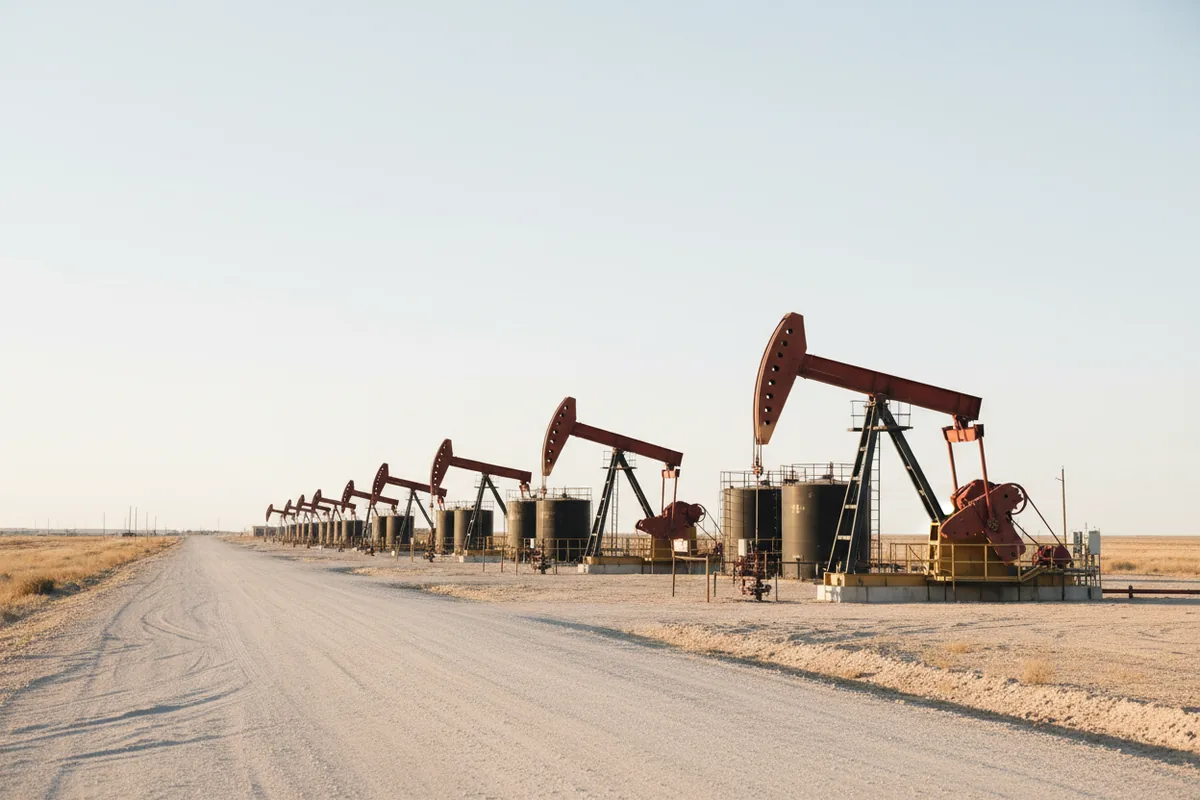
Sequential oilfield production pads receding along a caliche road toward the horizon.
Short answer

The stages of an oilfield injury claim: the employer's OSHA report under 29 C.F.R. § 1904.39, worker rights, workers' comp, other companies, and settlement or trial.

On this page
  1. Purpose
  2. What the Claim Process Looks Like From the Start
  3. Step 1: The Employer's Duty to Report — and What That Means for You
  4. Step 2: Your Rights Under OSHA After a Workplace Injury
  5. Step 3: The Workers' Compensation Claim — and Why It Is Rarely the Whole Picture
  6. Step 4: Finding Out Who Controlled the Site, the Work, and the Equipment
  7. Step 5: When a Chemical Release Triggers a Federal Investigation
  8. Step 6: What Happens After a Demand or Lawsuit Is Filed
  9. Methodology
  10. Interpretation
  11. What This Process Does Not Decide — and What Still Depends on the Facts
  12. Limitations
  13. Frequently asked questions
  14. Sources

An oilfield injury claim usually moves through several overlapping stages. The employer reports serious injuries and deaths to OSHA. The worker has rights under OSHA. A workers' compensation claim follows. Then comes the work of finding out which companies controlled the site, the work and the equipment. A claim against another company may lead to a demand or a lawsuit, and then to settlement or trial.

If you were hurt on a rig, at a well site or at a refinery, or if your family lost someone in one of these accidents, you may be dealing with hospital visits, missed paychecks and calls from people you have never met, all at once. Most people facing this process have never had to learn it before, and the explanations they find often leave out how the pieces fit together. This guide walks through each stage of an oilfield injury claim in order. For each one, it covers what the stage is, what it does and does not decide, and what tends to matter at that point.

Purpose

This guide lays out the usual sequence of an oilfield accident claim so a worker or a family can see where they are in it. The stages overlap. A workers' compensation claim may already be open while the question of which other companies were on location is still unanswered. For someone in that position, the stake is simple: a stage that goes unnoticed is a stage where records and options can be missed.

You may already be holding some of the records that matter. These can include hospital and treatment records, a copy of an incident report, photos or video taken at the site, pay stubs, and the names of coworkers who saw what happened. Keeping those together, and noting which stage each one relates to, is a common first step. The guide shows where each kind of record tends to fit. It cannot settle who was at fault, whether a claim exists, how much time remains to bring one, or what a claim might be worth.

What the Claim Process Looks Like From the Start

An oilfield injury claim is rarely a single straight line. The six stages named above often run at the same time, and each section below takes one in turn:

  1. The employer's duty to report certain injuries and deaths to OSHA.
  2. The worker's own rights under OSHA, including reporting an injury and getting copies of medical records.
  3. A workers' compensation claim.
  4. Identifying every company that controlled the site, the work or the equipment.
  5. A demand or a lawsuit against a company other than the employer.
  6. Settlement or trial.

One point applies to every stage: a report, a complaint or an investigation does not stop the time for an injury claim, and it does not decide who is at fault. The time to bring a claim is set by a statute of limitations, the law that sets how long a person has to file a lawsuit. That time is set by state law, and it differs from state to state. Fault rules and damages rules also differ by state. No single state's rule applies everywhere.

At this first stage, the main risk is treating one step, such as an OSHA report or an approved workers' comp claim, as the end of the process when other stages are still open. A useful early question is which stages are already underway and which have not started.

Step 1: The Employer's Duty to Report — and What That Means for You

Under 29 C.F.R. § 1904.39(a), an employer has two reporting duties:

  • It must report a work-related fatality to OSHA within eight hours after the death.
  • It must report an in-patient hospitalization, an amputation or the loss of an eye within twenty-four hours.

A related part of the regulation, 29 C.F.R. § 1904.39(b)(6), provides that an employer is required to report a fatality to OSHA only if the fatality occurs within thirty (30) days of the work-related incident. For an in-patient hospitalization, amputation, or loss of an eye, the regulation requires a report to OSHA only if the event occurs within twenty-four (24) hours of the work-related incident. The same subsection adds that these events must still be recorded on the employer's OSHA injury and illness records, if the employer is required to keep them.

The regulation lists three ways an employer can report:

  • By telephone or in person to the nearest OSHA Area Office.
  • By calling OSHA's toll-free number.
  • By electronic submission through OSHA's website.

The eight-hour and twenty-four-hour periods belong to the employer. They are not deadlines for the injured worker or the family, and they say nothing about how long anyone has to bring an injury claim.

A report creates an official record that the event happened. Whether a report was made, and when, is itself a fact that can be documented. If an employer did not report, that absence becomes part of the record of what happened afterward. A worker or family may want to find out whether a report was made, and note the answer alongside the other records.

Step 2: Your Rights Under OSHA After a Workplace Injury

OSHA's Worker Rights and Protections page states that you can speak up or report safety concerns "without being punished or treated unfairly." It also lists rights that include the following:

  • Report an injury or illness, and get copies of your medical records.
  • Review records of work-related injuries and illnesses.
  • See the results of tests taken to find workplace hazards.
  • Request an OSHA inspection, and speak to the inspector.
  • Be protected from toxic chemicals.
  • Receive required safety equipment.

Medical records generally show the diagnosis, the treatment and how an injury was described when care began. Workplace injury records and hazard test results can show what was documented at the site.

OSHA's File a Complaint page describes a safety and health complaint as a way to report unsafe or unhealthy conditions and to request an inspection. According to that page:

  • A complaint can be filed online, by phone, by letter or in person.
  • It can be filed in any language, and anonymously.
  • Someone else may file it for the worker.
  • The complaint "should be filed as soon as possible after noticing the hazard."
  • A signed complaint is more likely to result in an onsite inspection.

A whistleblower complaint is a separate track, for retaliation against a worker who raised a safety concern. OSHA's pages describe its filing deadline as short, so a worker who was disciplined or let go after speaking up may lose that track if it goes unnoticed.

These OSHA rights exist whether or not a workers' compensation claim has been filed. The records they can bring to light, such as medical records, incident reports and hazard test results, often become part of a later claim.

Step 3: The Workers' Compensation Claim — and Why It Is Rarely the Whole Picture

Workers' compensation is a state-run benefit system for work injuries that runs against the employer without proof of fault. Each state sets its own rules on who is covered, what benefits are paid, how a claim is filed and when.

In general terms, workers' comp benefits are aimed at medical treatment and a portion of lost wages. Workers' comp generally does not allow recovery for pain and suffering or for the full loss of future earning capacity. Those are categories a claim against another company may allow, depending on the facts and the state law that applies.

Filing a workers' comp claim does not, by itself, prevent a worker from also bringing a claim against a different company. How the two interact differs by state, including whether the comp insurer can seek repayment from a later recovery. The comparison of the two tracks explains that relationship in more detail.

Understanding both paths early affects which records and evidence end up mattering. Some evidence relevant to another company's role may never be gathered in a comp claim.

Step 4: Finding Out Who Controlled the Site, the Work, and the Equipment

Oilfield work is often layered. On a single location there can be several companies at once:

  • A well operator.
  • A drilling contractor.
  • Service companies.
  • The manufacturers of the equipment in use.
  • A staffing firm that placed the worker.

A third-party claim is a claim against a company other than the injured worker's direct employer. Whether one exists depends on what each company controlled and what legal duty it owed. Three legal theories can come up, depending on the facts:

  • Negligence: a failure to use reasonable care that causes harm.
  • Premises liability: the responsibility of whoever controls a property for dangerous conditions on it.
  • Product liability: a claim that a product, such as a piece of equipment, was defective and that the defect caused the injury.

Each theory asks for proof of specific elements. An injury on its own does not prove any of them.

For an injured worker, this step can decide whether recovery is limited to workers' comp or may reach categories like pain and suffering. A company left out here cannot be part of what follows. If you are trying to piece together who was responsible for what, the papers that tend to answer that question are the contracts between the companies, site safety plans, equipment maintenance and inspection records, and incident reports. Writing down the names of every company seen on location, and on the equipment, is one way to start.

Families after a death face the same question about which companies were involved. They also face separate rules about who may bring a claim, covered in the guide to fatal oilfield accident claims. The question of who can bring a claim is closely tied to this step, and it is one an attorney can help sort out from the contracts and site records.

Step 5: When a Chemical Release Triggers a Federal Investigation

The U.S. Chemical Safety and Hazard Investigation Board (CSB) describes itself, on its About the CSB page, as "an independent nonregulatory federal agency." The page says it is charged with investigating "any accidental chemical release that results in a fatality, serious injury or substantial property damage."

If the CSB comes to the site of your accident, its page describes what to expect. Investigators interview witnesses and gather documents, so you or your coworkers may be asked about what happened. Chemical samples and equipment are sent to independent laboratories for testing, and company safety records, inventories and operating procedures are examined. A draft report then goes to the Board, which may adopt a final report by written vote or in a public meeting.

The page also states that the CSB "does not issue fines or citations, but makes safety recommendations" for preventing future releases. A CSB report may document events in detail and can be a useful factual resource, but it is not a finding of negligence or legal liability, and it does not pause the time to bring a claim. Waiting for a federal report can feel like progress on a claim when it is not, while the time to file keeps running. A worker or family may note who investigators interviewed, which equipment was taken for testing, and how the findings, once public, fit with the records already gathered.

Step 6: What Happens After a Demand or Lawsuit Is Filed

A claim against another company often begins with a demand letter. The letter sets out the facts, the legal basis for the claim, and what the injured person or family is seeking. If no resolution follows, a lawsuit may be filed. Which court hears it depends on the parties and the claims.

The lawsuit then moves through these stages:

  1. Discovery. This is the stage where both sides exchange documents, take depositions (sworn, recorded questioning of witnesses), and bring in witnesses who give opinions on technical questions. Discovery often takes months.
  2. Settlement. A case can resolve through negotiation at any point before trial. Settlement is not assured.
  3. Trial. If the case does not settle, a judge or jury decides the outcome. The guide to how a claim can end describes each possible ending.

What is at stake at this stage is the money a claim may reach. For an injured worker, the law may allow medical expenses, lost wages, loss of earning capacity and pain and suffering. For a family after a death, wrongful death damages may also be available; wrongful death is a claim brought by certain family members for losses caused by a death. Whether any category applies, and how it is measured, depends on the facts and the governing law.

Everything in these later stages is built on what was gathered early: the records, the reports and the witness accounts. A loss that is not documented may be hard to support in discovery or settlement talks. Before a demand goes out, a person may weigh whether the records cover each loss being claimed, such as treatment bills, pay stubs showing missed wages, and accounts of how the injury affects daily life and work.

Methodology

This guide is built from four official federal sources, each used only for what its own text says:

  • The reporting regulation at 29 C.F.R. § 1904.39.
  • OSHA's Worker Rights and Protections page.
  • OSHA's File a Complaint page.
  • The CSB's description of its investigations.

The workers' compensation, third-party, demand, lawsuit and settlement stages are described in general terms, and no state's statute is quoted. The federal steps are described as their sources state them; the state-law stages are where the facts of a particular accident make the most difference, and this guide does not determine fault, set a deadline, or predict what any claim is worth.

Interpretation

Read each stage as a description of what usually happens, not a checklist that every claim completes. A worker may be in Step 3 and Step 4 at the same time. A family may never see Step 5 if no chemical release was involved. The stage that matters most depends on what happened, who was on location, and which state's law applies. Misreading which stage is open can mean evidence for an open stage goes ungathered.

When you see where you are in the sequence, a practical question usually follows: which stages are still open? A conversation with our attorney can cover which stages apply after a particular accident and which records relate to each one. If that would help, you can request a case evaluation.

What This Process Does Not Decide — and What Still Depends on the Facts

Each stage reflects the facts and the state law that apply.

The time a person has to file depends on several facts:

  • The state whose law applies.
  • When the injury happened.
  • Other facts specific to the situation.

States also follow different fault frameworks:

  • Contributory fault: any fault by the injured person can bar recovery.
  • Comparative fault: recovery is reduced by the injured person's share of fault.
  • Modified comparative fault: recovery is reduced by the injured person's share of fault, and barred once that share reaches a threshold set by the state.

Which framework applies can change whether a recovery is reduced or barred. A conversation with our attorney can address which rules govern, which stages fit the events, and what evidence bears on each, without any promise about how a claim will end.

Limitations

The guide also cannot account for facts it does not have, such as the specific contracts, equipment and companies involved in a particular accident. Those facts are often the ones that decide a claim, which is why the records described above carry so much weight.

Free case evaluation

No Fee Unless We Win Your Case

A free case evaluation is how it starts. Tell us what happened, and we’ll help you understand your options. You pay no fee unless we win your case.

Oilfield Injury Claims Authority

How it works

  1. Call us or request a free case evaluationTell us what happened, in your own words.
  2. Talk through your caseYour options, and what your case may be worth.
  3. No fee unless we winYou pay no attorney fee unless we win your case.
Free case evaluation

Tell Us What Happened

Frequently asked questions

Does my employer have to report my injury to OSHA?

For certain events, yes. Under 29 C.F.R. § 1904.39(a), an employer must report a work-related fatality within eight hours, and an in-patient hospitalization, amputation or loss of an eye within twenty-four hours. Under 29 C.F.R. § 1904.39(b)(6), a fatality is reportable to OSHA only if it occurs within thirty (30) days of the work-related incident, and an in-patient hospitalization, amputation, or loss of an eye is reportable only if it occurs within twenty-four (24) hours of the work-related incident. This is the employer's duty, not the worker's deadline.

Can I file a claim against a company other than my employer?

That depends on the facts. If another company, such as a well operator, a drilling contractor or an equipment manufacturer, controlled the site, the work or the equipment, a third-party claim may be possible under the state law that applies. Such a claim can run alongside workers' comp, though how the two interact differs by state.

What rights do I have under OSHA after a workplace injury?

OSHA's worker rights page lists the right to report an injury or illness and get copies of your medical records, to review injury records, to request an inspection, and to speak up without being punished. A safety and health complaint, OSHA's complaint page says, should be filed as soon as possible after noticing the hazard.

Does an OSHA report or investigation decide who is at fault?

No. An OSHA report records that an event occurred. A CSB investigation ends in safety recommendations, and the CSB states that it issues no fines or citations. Neither one is a legal ruling on negligence or liability. That question is decided, if at all, in a claim.

How long do I have to file an oilfield injury claim?

The time differs by state. It depends on which state's law applies, when the injury happened, and other facts. This page states no specific period. A conversation with an attorney about the date, the place and the companies involved is how that question gets a fact-specific answer.

What does workers' compensation cover in an oilfield injury case?

The rules differ by state. In general, the system is aimed at medical treatment and a portion of lost wages, and it runs against the employer without proof of fault. It generally does not reach pain and suffering or the full loss of earning capacity. A third-party claim may allow those categories, depending on the facts and the governing state law.

What is a third-party claim in an oilfield accident?

It is a claim against a company other than the direct employer, based on what that company controlled. It may rest on negligence (a failure to use reasonable care), premises liability (responsibility for conditions on property a company controls), or product liability (a defective product that caused harm). Each requires proof.

What does the Chemical Safety Board do after an oilfield accident?

Where an accidental chemical release causes a death, serious injury or substantial property damage, the CSB may investigate. It interviews witnesses, tests samples and equipment, and examines company records. Its final reports carry root causes and safety recommendations. They are public records of what happened, not verdicts.