Skip to content

Incidents

Well Blowout Injury Lawyer: What Workers and Families Need to Know

National · laws differ by state · Updated November 10, 2026

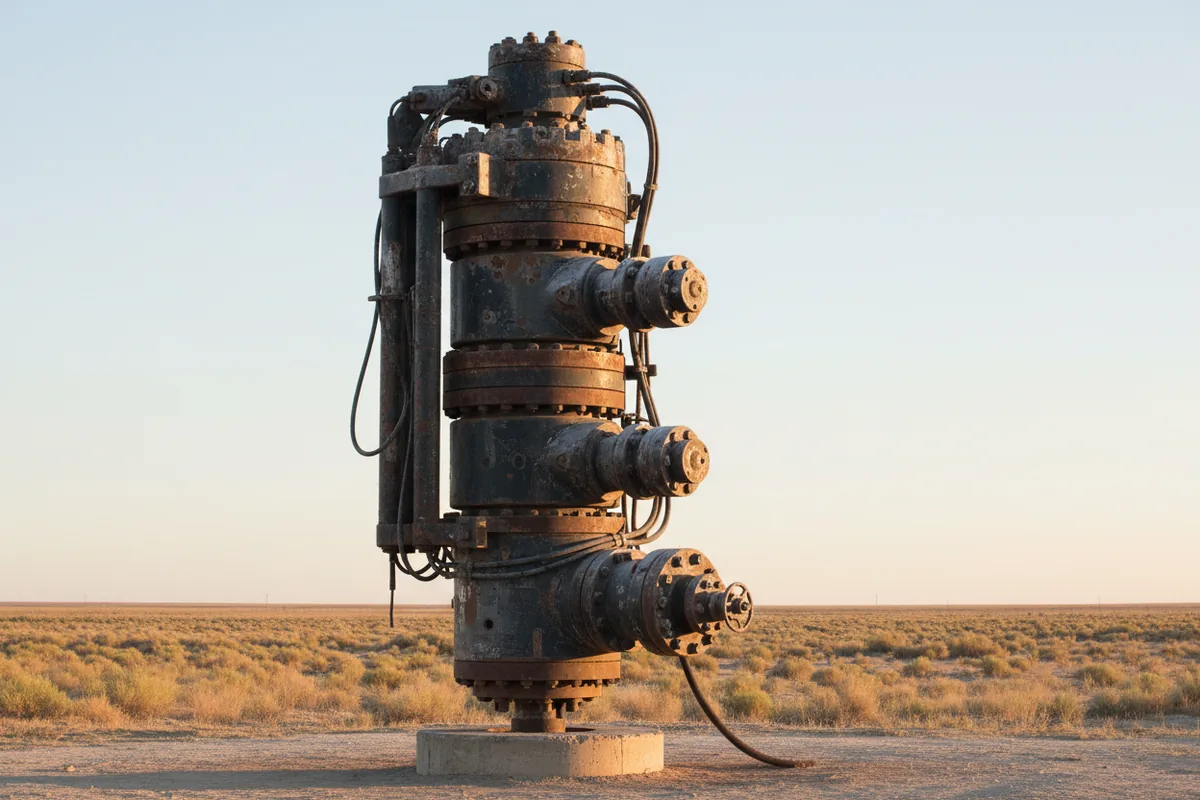
A blowout preventer stack on a land wellhead, the critical equipment involved in well-control failures.
Immediate answer

After a well blowout: how control is lost, who may answer by type, the records that matter, the federal general duty in 29 U.S.C. § 654(a), and why state law governs.

On this page
  1. Key Takeaways
  2. Whether Your Situation May Support a Claim
  3. How a Well Loses Control — and What a Legal Review Examines
  4. Who May Be Responsible for a Well Blowout Injury
  5. The Employer's Duty Under Federal Law — and What It Does and Does Not Cover
  6. Records That Often Matter in a Well Blowout Case
  7. Injuries and What the Law May Allow a Claim to Seek
  8. How State Law Shapes a Well Blowout Claim
  9. Questions Worth Asking Before Moving Forward With a Well Blowout Claim
  10. Frequently asked questions
  11. Sources

A well blowout injury claim asks why control of a well was lost and who was responsible for keeping it. It looks at the well control equipment, the crew's training, the warning signs and the decisions made. A worker hurt in a blowout, or a family after a death, may have legal claims, and state law and the facts decide which ones apply.

If you were on location when a well came in, you may be dealing with burns or other serious injuries, weeks away from work, and a company that has not told you much about what went wrong. If you lost someone, you may be trying to understand an event that happened in minutes and that nobody has explained. Most people facing a blowout injury are asking the same few questions: what happened downhole, which of the companies on the lease had a hand in it, and what the law allows from here. This page walks through those questions the way they usually come up in a conversation about one of these cases.

Key Takeaways

  • Well blowout: an uncontrolled release of oil, gas or other well fluids that happens when pressure control of the well is lost. Because the hazard comes from inside the well, the legal questions center on the barriers meant to hold it back and who was responsible for them.
  • Consequences: blowouts can lead to fires, explosions, toxic exposure and catastrophic injuries or death. When escaping gas ignites, the event can resemble a rig fire; rig explosions have their own page on this site.
  • Legal theories: negligence asks whether a company failed to use reasonable care; product liability asks whether equipment was defective.
  • Federal general duty: 29 U.S.C. § 654(a) places a general safety duty on covered employers, though it works differently from a lawsuit.
  • State law governs: most civil claims after a blowout, including limitation periods, fault rules, damages rules and workers' compensation, depend on the state. Some oilfield workers may have claims outside workers' compensation depending on how they were employed.
  • Several companies: a blowout case often involves more than one company and more than one body of law. The oilfield accident lawyer overview covers how oilfield claims generally fit together.

Whether Your Situation May Support a Claim

Many workers reasonably wonder whether being hurt on a job site where the well blew out is enough to bring a claim. It is not, on its own. An injury does not prove anyone was at fault, and a failed piece of equipment does not by itself prove a defect. What the law asks is more specific.

A negligence claim generally requires four things: a duty owed by the company, a breach of that duty, causation linking the breach to the injury, and damages. A product liability claim asks whether a product was defective and whether that defect caused the harm. Whether any of these elements is met depends entirely on the facts.

The facts that usually matter in a blowout come back to a handful of questions:

  • How control of the well was lost, and at what point the crew recognized it.
  • Whether blowout prevention equipment was on the well, and whether it had been tested.
  • Whether the crew had been trained in well control procedures.
  • What warning signs came before the event, and how they were read.
  • Who made the decisions in the hours and minutes before the release.

Employment classification matters as well. Whether a worker was an employee of the company sued, an employee of a contractor, or treated as an independent contractor can affect which legal theories are open and which state's rules apply. Two workers standing side by side on the same rig floor can end up in very different legal positions.

The questions, then, are less about how badly someone was hurt and more about who controlled what on that well. Details such as who paid the worker and who gave the orders on location often decide which path is available.

These cases usually begin far below the rig floor. In general terms, a blowout happens when pressure from the formation downhole exceeds the weight of the drilling fluid in the well, the well begins to flow, and the well control equipment fails to contain it. Pressure imbalance, equipment failure and human decisions can all play a part, and often more than one does.

A blowout preventer, usually called a BOP, is a set of heavy valves at the top of the well designed to seal it off when the well starts to flow. It is the primary mechanical barrier, so its condition, its testing history and its maintenance records sit at the center of any legal review. The questions are whether it was the right equipment for the well, whether it worked when called on, and if not, why. For an injured worker, those answers are often what separates a claim against an operator or contractor from a product liability claim against a manufacturer.

Beyond the equipment, a review looks at the human sequence: the daily drilling reports, equipment test records, training records, communications before and during the event, and the decisions of the operator and the drilling contractor. A blowout is rarely a single moment of failure; it is usually a chain, and the chain is documented, if at all, in those records. If those records are missing or were destroyed, reconstructing that chain becomes harder, and the gap itself can become a question in the case.

Public investigations can also matter. The U.S. Chemical Safety and Hazard Investigation Board, described on its About the CSB page, is an independent nonregulatory federal agency charged with investigating "the facts, conditions, and circumstances and the cause or probable cause of any accidental chemical release that results in a fatality, serious injury or substantial property damage." The CSB states that it "does not issue fines or citations, but makes safety recommendations." Its investigators, by its account, interview witnesses and examine "company safety records, inventories, and operating procedures."

An outside investigation can bring facts to light, but it is not a ruling on anyone's legal responsibility. Whether an agency has opened an inquiry, and how its report fits alongside a civil claim, is one of the topics a conversation with an attorney can clarify.

Who May Be Responsible for a Well Blowout Injury

An oil or gas well is rarely run by one company. Several types of businesses may have had a role, and a legal review may look at each:

  • The well operator, which generally holds overall responsibility for well control decisions and the safety of the operation.
  • The drilling contractor, which provides the rig, the crew and the drilling services, and may owe duties about equipment maintenance, crew training and well control procedures.
  • Well control or service companies, outside contractors that may have done pressure control, cementing or other work bearing on how control was lost.
  • Equipment manufacturers and sellers, where a blowout preventer or other well control device failed and a product liability claim would examine whether a defect caused or contributed to the failure.

Each type of company owes different duties, and a claim against each would need to show different things. A case against an operator may turn on its decisions; a case against a manufacturer turns on a defect and causation. The drilling rig accident page explains in more detail who is usually on a land location and what each controls.

Responsibility can also be shared. Comparative fault is the rule in many places that divides responsibility among the parties, including the injured worker, and reduces what a claim can recover by the worker's share. Some states use contributory negligence, which may bar recovery entirely if the worker was partly at fault. These rules differ by state, and they can change what a claim is able to seek.

Because of this, the list of companies involved is often the first question that matters. Company names on paychecks, hard hats, trucks and site paperwork are often where that list starts.

The Employer's Duty Under Federal Law — and What It Does and Does Not Cover

Federal law sets a baseline. Under 29 U.S.C. § 654(a), each employer the Act covers "shall furnish to each of his employees employment and a place of employment which are free from recognized hazards that are causing or are likely to cause death or serious physical harm to his employees" and "shall comply with occupational safety and health standards promulgated under this chapter." OSHA's Worker Rights and Protections page calls this the General Duty Clause, "which requires them to keep their workplaces free of serious recognized hazards."

That duty is enforced by OSHA. It is a standard of conduct, not a lawsuit a worker files. The Act says in 29 U.S.C. § 653(b) that nothing in it shall "supersede or in any manner affect any workmen's compensation law or to enlarge or diminish or affect in any other manner the common law or statutory rights, duties, or liabilities of employers and employees." The same section provides that the Act does not apply to working conditions over which other federal agencies, or certain state agencies, exercise statutory authority to set or enforce safety standards. A documented OSHA violation may be relevant evidence in a negligence claim, but whether it bears on liability depends on the facts and the state's law.

The Act also protects workers who speak up. Under 29 U.S.C. § 660(c), no person may discharge or discriminate against an employee for filing a complaint or exercising rights under the Act, and an employee who believes this happened "may, within thirty days after such violation occurs, file a complaint with the Secretary."

Workers' compensation rules differ by state. Some oilfield workers are classified as independent contractors and may not be covered by a particular company's workers' compensation policy; state law decides that. The federal duty helps describe what a safe well site should look like, while the right to bring a claim comes from somewhere else, and a worker's classification often shapes which options follow.

Records That Often Matter in a Well Blowout Case

A well leaves a paper trail. The records that usually matter include:

  • Daily drilling reports, which document the well's condition, fluid weights and any anomalies in the days and hours before the blowout.
  • Blowout preventer test records, which show whether the BOP was tested, when, and whether it passed.
  • Well control training and certification records, which show whether the crew was trained in well control procedures.
  • Communications, including radio logs, emails and text messages, which can show the decisions made before and during the loss of control.
  • Incident and accident reports filed with the employer or with a government agency.
  • The physical equipment, where it has been preserved, since a BOP or its components may be examined by engineers.

Each category answers a different legal question: drilling reports speak to warning signs, test records to equipment condition, training files to crew preparation, and communications to who made which call. Together they are often how causation is shown, or not shown. When a category is missing or destroyed, the question it would have answered can be left open, which is why the condition and location of these records tends to come up early.

Most of these records are held by the companies, not the worker. Injured workers and families often keep what is within reach: their own medical records, photos or video from the site, pay stubs showing who employed them, names of coworkers who were there, and any texts or messages from that day. OSHA's worker page notes a worker's right to "report an injury or illness, and get copies of your medical records" and to "review records of work-related injuries and illnesses."

The oilfield injury guides and resources page describes what agency records can and cannot do.

Injuries and What the Law May Allow a Claim to Seek

Blowouts can cause severe burns, blast and shrapnel injuries, exposure to toxic gases, head injuries, crush injuries, falls from height, and death. The injuries are often the reason the case is serious, but they are not proof of how the blowout happened or who was responsible. Medical questions belong with treating providers; this page describes the legal side only.

The law may allow a claim to seek several categories of damages, depending on the facts and the state. They can include past and future medical expenses, lost wages and lost earning capacity, physical pain and suffering, emotional distress and disfigurement. Where a worker dies, wrongful death damages may be available; a wrongful death claim is one brought on behalf of survivors or an estate after a death caused by another's wrongful conduct.

Wrongful death rules differ by state. Who may bring the claim, whether a spouse, a parent, a child or an estate, and what they may recover depend on the state where the claim is brought. Caps on damages and rules on non-economic damages, such as pain and suffering, also differ by state.

For a worker facing a long recovery, these categories matter because some losses, like future earning capacity, are easy to overlook in the first weeks. Medical records, wage history and household details tend to be what shows what was lost.

How State Law Shapes a Well Blowout Claim

No single rule governs every blowout claim in the country. A statute of limitations, the deadline for filing a lawsuit, differs from state to state for personal injury and wrongful death. Each state's law defines when that period begins to run, and exceptions may apply. This page sets out no state's deadline. Fault and damages rules vary as well, as described above.

Offshore wells add another layer. A well offshore may raise federal questions in addition to, or instead of, state tort law, and the legal framework there is more complex than for an onshore well. Which rules apply depends on where the well was located and the facts of the injury.

The state where the injury happened, where the worker was employed, and where the well was located can all bear on which law applies. That means a deadline is never safe to assume from what someone else was told. A conversation with an attorney can help identify which state's law may govern and which deadlines that law sets.

Questions Worth Asking Before Moving Forward With a Well Blowout Claim

Families reach this point holding a lot of unknowns. The questions that tend to shape a blowout claim are practical ones: which companies were involved in the operation, what role each played, whether the well control equipment was maintained and tested, whether the crew's training was adequate, and what the chain of decisions looked like before control was lost.

A second set of questions is legal. Whether workers' compensation is the only remedy against a direct employer, or whether a separate negligence or product liability claim is also open against another company, depends on the state and the worker's employment classification. Which state's law governs, and what limitation period it sets, are questions of the same kind.

A general overview of the law has real limits. This page cannot resolve the specific facts of what happened on your well, identify which state's rules apply to you, or determine whether a claim exists. Those answers depend on details that only come out by talking through what happened. This page also does not cover medical questions or any one state's deadlines.

A conversation can cover which legal theories may fit, which state's law may govern and how its deadlines work. To talk through those questions about a blowout, you can request a case evaluation.

Free case evaluation

No Fee Unless We Win Your Case

A free case evaluation is how it starts. Tell us what happened, and we’ll help you understand your options. You pay no fee unless we win your case.

Oilfield Injury Claims Authority

How it works

  1. Call us or request a free case evaluationTell us what happened, in your own words.
  2. Talk through your caseYour options, and what your case may be worth.
  3. No fee unless we winYou pay no attorney fee unless we win your case.
Free case evaluation

Tell Us What Happened

Frequently asked questions

What is a well blowout and how does it differ from other oilfield accidents?

A well blowout is an uncontrolled release of oil, gas or other fluids after pressure control of a well is lost. Unlike a dropped load or a vehicle accident, the hazard starts inside the well itself. That is why the legal questions focus on the barriers meant to stop it, the blowout preventer and well control procedures, and who answered for them.

Who can be held responsible for a well blowout injury?

Depending on the facts, the operator, the drilling contractor, a well control or service company, or a maker or seller of equipment that failed may be examined. Whether any of them is legally responsible depends on the duty it owed, whether it breached that duty, and whether the breach caused the injury.

Can an oilfield worker sue after a well blowout if workers' compensation applies?

That depends on the state and the worker's employment classification. Workers' compensation rules differ by state. In some situations a worker may also bring a separate negligence or product liability claim against another company on the site, such as a contractor or an equipment maker, rather than against the direct employer.

What records matter most in a well blowout injury case?

Daily drilling reports, blowout preventer test records, training and certification files, communications from before and during the event, and incident reports are often central. Preserved equipment can matter too. Which records matter most depends on the questions the case raises about how control was lost and who made the decisions.

How long does a worker or family have to file a well blowout injury claim?

The limitation period for personal injury and wrongful death differs by state, and each state's law decides when it starts to run and what exceptions apply. Offshore claims can involve different rules. The answer in any given situation depends on the state whose law governs and the facts.

What does OSHA's general duty clause mean for a well blowout claim?

Under 29 U.S.C. § 654(a), each employer the Act covers must provide a workplace free from recognized hazards causing or likely to cause death or serious physical harm. OSHA enforces that duty; it is not itself a lawsuit. A documented violation may be relevant evidence, but its effect depends on the facts and state law.

What damages can a well blowout injury claim seek?

The law may allow a claim to seek medical expenses, lost wages and earning capacity, pain and suffering, emotional distress and disfigurement. After a death, wrongful death damages may be available. Who may bring that claim, what it covers and any caps all differ by state. This page states no amounts.

Does federal law apply to well blowout injuries on offshore rigs?

Offshore wells may be governed by federal law in addition to, or instead of, state tort law, which makes those claims more complex than onshore ones. Which rules apply depends on where the well was located and the facts of the injury.