Skip to content

Hazards

Refinery Fire Injury Lawyer: What Workers and Families Need to Know

National · laws differ by state · Updated November 10, 2026

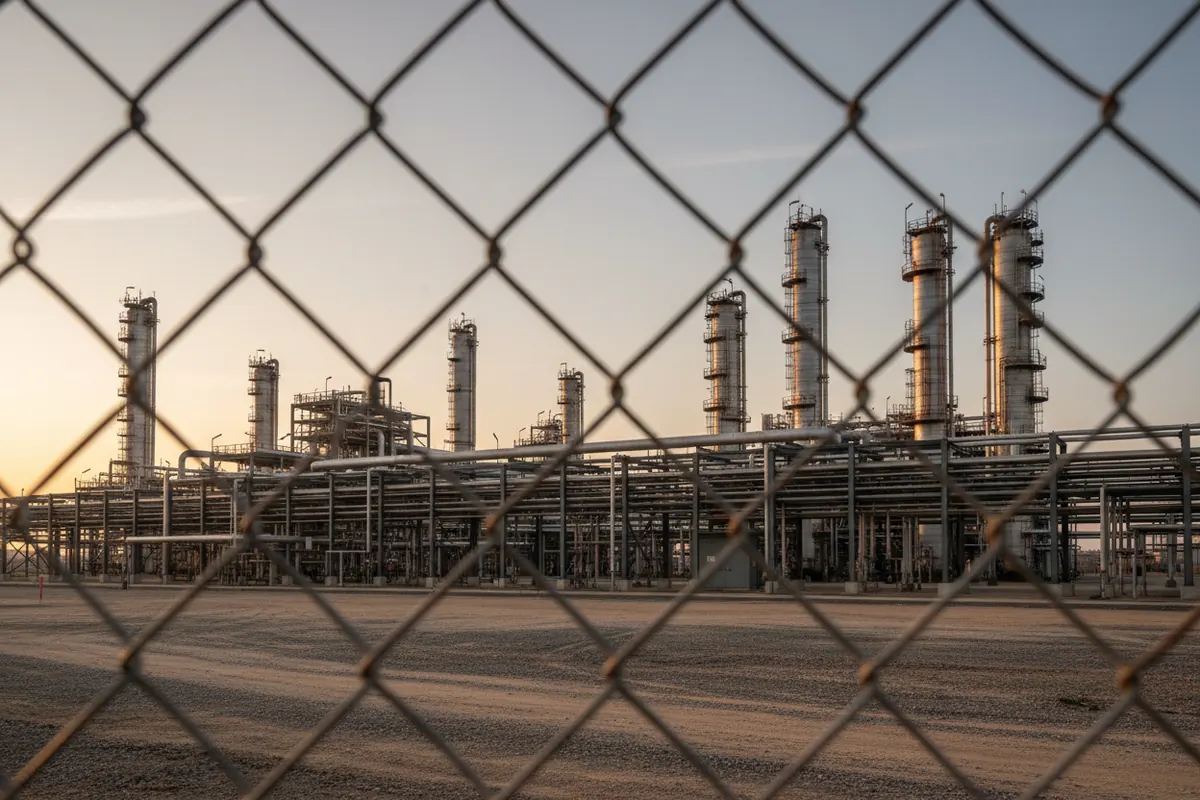
A refinery pipe rack and columns seen through a perimeter fence at dawn.
Immediate answer

After a refinery or plant fire: the federal hot-work and flammable-liquid rules, who may be answerable by type, the records that matter, and why state law decides.

On this page
  1. Key Takeaways
  2. What Makes a Refinery Fire Case Different From an Ordinary Workplace Injury
  3. How Refinery and Plant Fires Happen: What Investigators Look At
  4. Who May Be Responsible for Your Injuries — and Why It Is Not Always the Employer
  5. Evidence That Usually Matters After a Refinery or Plant Fire
  6. Injuries and Damages in Refinery Fire Cases
  7. How State Law Shapes What a Refinery Fire Claim Can Show
  8. Questions Worth Asking Before You Speak With a Refinery Fire Attorney
  9. Frequently asked questions
  10. Sources

If you were hurt in a fire at a refinery, plant or oilfield site, or lost someone in one, the law may allow claims beyond your employer. A site owner or operator, a contractor doing hot work, or an equipment maker may be answerable, depending on what caused the fire and the law of the state where it happened. Federal safety rules shape what investigators and courts examine.

Most people facing this are not thinking about legal theories. They are thinking about a hospital stay, a paycheck that stopped, a family member who may not go back to the same job, or a funeral. They are also hearing questions they cannot yet answer: whose permit covered the work, which company owned the unit, whether the equipment had been serviced. This page explains how fires at energy worksites are examined after the fact, who may be responsible by type, the records that usually matter, and why the state where the fire happened decides so much of what follows.

Key Takeaways

  • Federal welding and cutting rules do more than tell workers to be careful. 29 C.F.R. § 1910.252(a) assigns fire-prevention duties to welders and cutters, their supervisors (including outside contractors) and the management of the property where the work is done. That division of duties often points to more than one company.
  • The definition of a flammable liquid in 29 C.F.R. § 1910.106(a)(19) is broader than many people assume. It covers any liquid with a flashpoint at or below 199.4 °F (93 °C), sorted into four categories.
  • Under 29 U.S.C. § 654(a), each employer the Act covers has a general duty to keep its workplace free from recognized hazards that are causing or are likely to cause death or serious physical harm. The Act's own definition of an employer leaves some employers out.
  • Responsibility may reach past the direct employer to a site owner or operator, a contractor, a maintenance company or an equipment manufacturer.
  • The Chemical Safety Board investigates accidental chemical releases and does not issue fines or citations. Its findings do not by themselves establish anyone's legal fault.
  • Limitation periods, fault rules and damages rules differ from state to state. No single national rule applies.

What Makes a Refinery Fire Case Different From an Ordinary Workplace Injury

A refinery, chemical plant or oilfield site is rarely one company's workplace. On a given day the people near a unit may work for the owner, the operator, a maintenance contractor, a welding or turnaround crew and several subcontractors, each controlling different equipment and tasks. Add flammable liquids and gases, and work that throws heat and sparks, and a single fire can trace back to decisions made by several companies at once.

That is why the direct employer may not be the only party whose conduct gets examined. Workers' compensation is the system most states use to pay benefits to workers injured on the job, and its rules differ by state. This page does not state any state's rule. Depending on state law, a separate claim against a company other than the employer, often called a third-party claim, may exist alongside workers' compensation or apart from it.

Two legal theories come up again and again. Premises liability is the body of law about the duty a property's owner or operator owes to people lawfully on the property, including workers who are not its own employees. Product liability is the body of law about injuries caused by a defective product, such as a valve, pump, burner or fire-suppression component. A third theory, negligence by a contractor, asks whether a company doing work on site failed to use reasonable care.

Each theory asks the same core questions: whether a party owed a duty, whether it breached that duty, whether the breach caused the injury, and what harm resulted. An injury alone does not answer any of them, and the rules depend on the state and the facts. For a worker or family, the first question is often not "can I sue my employer" but "which other companies were in control of what, at that moment." One step worth weighing is writing down every company name the worker remembers seeing on site that day. A conversation with an attorney can help sort out which of these legal avenues may apply where the fire happened.

How Refinery and Plant Fires Happen: What Investigators Look At

These fires usually begin where a fuel meets an ignition source: flammable liquid or gas escapes, or was never fully cleared, and heat, a spark or hot equipment reaches it. Investigators tend to focus on four things: the ignition source, whether hot-work procedures and permits were followed, what was released and why, and the condition of fire-protection equipment. Explosions follow a related but different path and are discussed on the refinery explosion page.

Hot work is where the federal text is most specific, and it lays out a checklist that can later be compared with what actually happened. Under 29 C.F.R. § 1910.252(a), if the object being welded or cut cannot readily be moved, movable fire hazards nearby are to be taken to a safe place; if the hazards cannot all be removed, guards are to confine heat, sparks and slag; and if neither can be done, the welding or cutting is not to be performed. Before cutting or welding is permitted, the person responsible for authorizing it is to inspect the area and designate precautions, "preferably in the form of a written permit." Fire watchers are required in listed conditions, including appreciable combustible material closer than 35 feet to the work, and a fire watch is to be kept for at least a half hour after the work ends. The rule also bars cutting or welding in listed situations, including in the presence of explosive atmospheres, and bars hot work on used drums, tanks or other containers until they are cleaned so that no flammable materials remain, with connected lines disconnected or blanked. If you were on the crew, what you saw of the permit, the fire watch and the area before work began may matter.

The type of fuel matters too, because the federal definition reaches further than the word "flammable" suggests. Under 29 C.F.R. § 1910.106(a)(19), a liquid with a flashpoint at or below 199.4 °F (93 °C) counts as a flammable liquid, and the rule sorts these liquids into four categories by flashpoint and, for the most volatile, boiling point. Under the same paragraph, some liquids heated for use to within 30 °F of their flashpoint are to be handled under the requirements for a more hazardous category. For a family, this means the liquid at the center of a fire may fall under these rules even if no one on site thought of it as especially dangerous.

One agency that may look into a serious fire is the Chemical Safety Board. It describes itself as an independent, nonregulatory federal agency that investigates the facts, conditions, circumstances and cause or probable cause of accidental chemical releases resulting in a fatality, serious injury or substantial property damage. Its page says root causes are usually deficiencies in safety management systems, that it does not issue fines or citations, and that it makes safety recommendations. A board report describes what the board found; it does not by itself establish that any party was legally at fault.

The sequence of events is part of what any legal claim has to show. A worker or family may weigh asking which agencies, if any, have examined the fire, and an attorney can help sort out how those findings fit with the hot-work rules above.

Who May Be Responsible for Your Injuries — and Why It Is Not Always the Employer

Many families reasonably wonder why anyone other than the employer would be involved. The answer usually lies in who controlled the place, the work and the equipment when the fire started.

The site owner or operator, when it is not the worker's employer, may be examined under premises liability. The federal hot-work rule gives management on its property specific responsibilities. Under 29 C.F.R. § 1910.252(a), management is to establish areas and procedures for cutting and welding based on fire potential, designate a person to authorize hot work in areas not designed for it, insist that cutters, welders and supervisors are suitably trained, and advise all contractors about flammable materials or hazardous conditions of which they may not be aware.

A contractor performing hot work may be examined under negligence. The same regulation makes the supervisor responsible for, among other things, determining the combustible materials and hazardous areas present, protecting combustibles from ignition, securing authorization from management, confirming that fire protection equipment is properly located, and seeing that fire watches are available where required.

An equipment or component manufacturer may be examined under product liability, if a defect in a valve, pump, burner or fire-suppression component is suspected. A fire does not prove a defect; whether one existed and whether it caused the injury depends on the evidence. A maintenance company may be examined for how it inspected, repaired or serviced equipment.

Separately, 29 U.S.C. § 654(a) requires each employer the Act covers to furnish employment and a place of employment free from recognized hazards that are causing or are likely to cause death or serious physical harm to its employees, and to comply with OSHA standards. That duty runs to the employer's own employees.

Fault may also be divided. Comparative fault is a rule that may reduce, or in some states bar, recovery based on each party's share of responsibility, including the injured person's. A regulation that applies to a company does not show by itself that the company breached it. For someone in your position, the question worth weighing is which company held which piece of control that day: who issued the permit, who supervised the crew, who supplied and serviced the equipment. Those are questions an attorney can help put in order. The refinery accident page covers the wider set of rules for these sites.

Evidence That Usually Matters After a Refinery or Plant Fire

The records that usually matter fall into a handful of groups, and each speaks to a different part of what a claim has to show. For someone hurt or bereaved, the stakes are practical: much of what a claim can prove depends on records that may sit in other companies' hands.

Hot-work permits and fire-watch records speak to whether the steps in 29 C.F.R. § 1910.252(a) were taken: who authorized the work, what precautions were designated, whether a fire watch was posted and how long it stayed. Equipment maintenance and inspection logs speak to the condition of valves, lines, pumps and fire-suppression equipment before the fire. Incident reports prepared by the employer or the site operator record what each company said happened, though an incident report does not by itself establish what caused an injury.

Official records may exist as well. OSHA's worker rights page lists among workers' rights the right to report an injury or illness and get copies of medical records, to review records of work-related injuries and illnesses, and to see results of tests taken to find workplace hazards, and it notes that a person can check an employer's OSHA inspection history. Any OSHA inspection records and citations issued after the fire may become part of the picture; a citation is an agency's allegation, not a court's finding of liability. If the Chemical Safety Board opened an investigation, its page describes interviews of witnesses, documents obtained, chemical samples and equipment sent to independent laboratories, and company safety records and operating procedures examined. Its report, once adopted, is one more record, not a verdict.

Medical records document the injuries and treatment. Photographs and video from the scene, and the names of coworkers and others who saw the fire or the work before it, often fill gaps the paperwork leaves.

A conversation with an attorney at this stage can help a family see which records likely exist, who holds them, and how they connect to the questions above. The guides and resources page explains what OSHA and Chemical Safety Board records can and cannot do.

Injuries and Damages in Refinery Fire Cases

For a worker or family, the injuries from a fire at an energy worksite are what the rest of a claim is measured against: burns, smoke inhalation, injuries from a related blast and, in the worst cases, death. This page speaks to those injuries only in general terms and gives no medical information.

When a claim outside workers' compensation exists, the categories of damages the law may allow usually include medical expenses, past and future; lost wages and lost earning capacity; and pain and suffering. When a worker dies, families may look to wrongful death: a claim, created by state law, that lets certain family members seek damages for the loss of a person whose death was caused by another's wrongful conduct. Who may bring that claim and what it may include are set by each state.

Damages rules differ by state, including whether any category is capped and how wrongful-death damages work. Whether damages are available at all, and in which categories, depends on the facts and the applicable state's law. No page can say what a particular case may lead to.

When the bills are arriving and income has stopped, this can feel abstract. In practice, the records of treatment, missed work and the person's work history are often what a damages question turns on. Families may weigh keeping those records together over the months of recovery, and an attorney can help sort out which categories may apply under the state's law.

How State Law Shapes What a Refinery Fire Claim Can Show

The federal rules above shape what was required at the site. State law decides most of the rest, and three sets of state rules carry particular weight.

A statute of limitations, defined as the period within which a claim has to be filed, after which a court may refuse to hear it, is set by each state. It starts to run on a date that state's law specifies, and exceptions may apply. This page does not state any state's period, and it cannot say how much time any reader has.

Fault rules also vary. Some states use comparative fault, which may reduce a recovery by the injured person's share of responsibility; others use contributory fault, a stricter variant that can bar recovery. Damages rules, including caps and wrongful-death rules, vary too. No state's rule is the national rule.

Which state's law applies is itself a question. A fire at a site in one state, involving a worker who lives in another and companies based elsewhere, can raise it. For a family, the practical stake is that a deadline and a fault rule depend on that answer.

This is the point at which it may help to request a case evaluation and talk through where the fire happened, which companies were involved, and which state's limitation period and fault rules may govern the matter.

Questions Worth Asking Before You Speak With a Refinery Fire Attorney

When a worker or family member comes to a first conversation, the questions that tend to shape it are factual, and none of them has to be answered perfectly. What is at stake is that each answer points toward, or away from, a particular kind of claim.

Who was the worker's direct employer at the time of the fire? Who owned the refinery, plant or site, and was a different company operating it? What contractors or subcontractors were working on or near the unit, and was anyone doing welding, cutting or other hot work? What equipment or systems were involved in the fire or the release, and who maintained them? What records does the worker or family already have: medical records, pay records, photographs, an incident report, names of coworkers who were there?

The employer question points to workers' compensation and the general duty in 29 U.S.C. § 654(a). The owner, operator and contractor questions point to premises liability and negligence. The equipment question points to product liability and maintenance. The records question points to what can be shown.

A case evaluation is a conversation with an attorney about what happened. It is not a promise of representation and not a prediction of how anything will turn out.

This page is about fires. It does not set out any state's deadlines, workers' compensation rules or damages rules, it gives no medical information, and it treats explosions only in passing; blowouts on a drilling location have their own page on drilling rig accidents.

Free case evaluation

No Fee Unless We Win Your Case

A free case evaluation is how it starts. Tell us what happened, and we’ll help you understand your options. You pay no fee unless we win your case.

Oilfield Injury Claims Authority

How it works

  1. Call us or request a free case evaluationTell us what happened, in your own words.
  2. Talk through your caseYour options, and what your case may be worth.
  3. No fee unless we winYou pay no attorney fee unless we win your case.
Free case evaluation

Tell Us What Happened

Frequently asked questions

Can a refinery worker sue someone other than their employer after a fire?

Depending on state law, possibly. A site owner or operator, a contractor, a maintenance company or an equipment maker may be examined if its conduct or product is connected to the fire. Whether any such claim exists turns on who controlled what, the facts, and the law of the state involved.

What federal safety rules apply to fire prevention at refineries and plants?

29 C.F.R. § 1910.252(a) sets fire prevention steps for welding and cutting, including authorization, fire watches and removal or guarding of combustibles. 29 C.F.R. § 1910.106(a)(19) defines flammable liquids. 29 U.S.C. § 654(a) sets a general duty for covered employers. A rule applying does not by itself show anyone broke it.

What does the Chemical Safety Board do after a refinery fire?

It investigates accidental chemical releases that result in a fatality, serious injury or substantial property damage, looking for root causes and issuing safety recommendations. It does not issue fines or citations. Its findings describe what the board concluded; they do not by themselves establish legal fault in a civil claim.

How long does a refinery fire injury claim have to be filed?

Each state sets its own limitation period, when it starts to run and its exceptions, so no single national deadline exists. Which state's law applies can itself be a question when a worker, the site and the companies are in different places, which is why the state-specific answer matters.

What records matter most after a refinery or plant fire?

Records that often matter include hot-work permits, fire-watch records, maintenance and inspection logs, incident reports, OSHA inspection records and any citations, medical records, photographs and video, and witnesses' names. Many of these are held by the companies on site rather than by the worker or family.

What is a product liability claim in a refinery fire case?

It is a claim that a defective product, such as a valve, pump, burner or fire-suppression component, caused an injury. It asks whether a defect existed and whether it caused the harm. A fire does not prove a defect; that depends on the evidence about the equipment itself.

Does comparative fault affect a refinery fire injury claim?

It may. Under comparative fault, a recovery may be reduced by the injured person's share of responsibility. Under contributory fault, used in some states, that share can bar recovery. Which rule applies, and how it works, depends on the state.

What damages can a family seek after a fatal refinery fire?

A wrongful-death claim lets certain family members seek damages after a death caused by another's wrongful conduct. Categories the law may allow can include medical expenses, lost income and other wrongful-death damages. Who may bring the claim and what it includes are set by the applicable state's law.

Sources

Statutes, regulations and court sources

  1. 0129 U.S.C. § 654, Duties of employers and employees (govinfo.gov) · GovInfo (U.S. Government Publishing Office)
  2. 0229 C.F.R. § 1910.252, General requirements: fire prevention and protection (eCFR) · Electronic Code of Federal Regulations
  3. 0329 C.F.R. § 1910.106, Flammable liquids (eCFR) · Electronic Code of Federal Regulations

Other sources

  1. 04Worker Rights and Protections, Occupational Safety and Health Administration · Occupational Safety and Health Administration
  2. 05About The CSB, U.S. Chemical Safety and Hazard Investigation Board · csb.gov