Skip to content

Claim issues

Who Is Your Employer After an Oilfield Accident — and Why It Matters

National · laws differ by state · Updated November 11, 2026

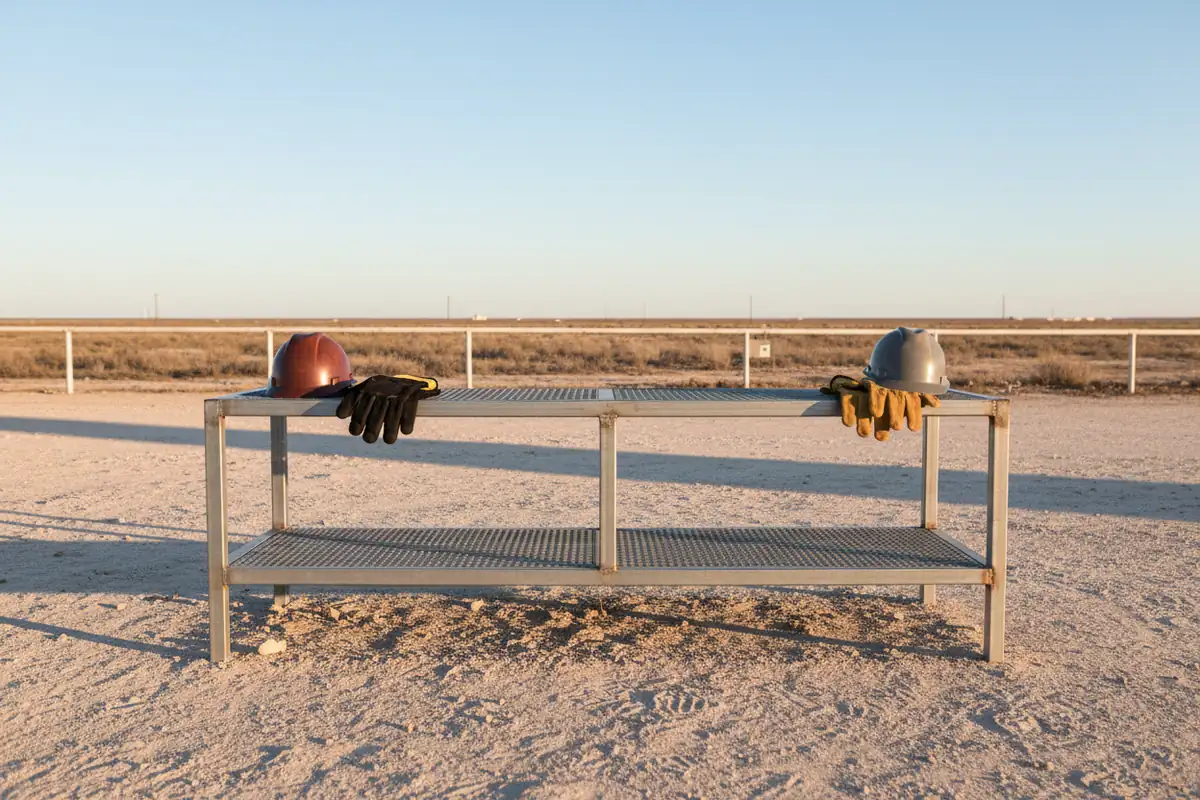
Separate sets of hard hats and gloves on a steel rack at an oilfield lease.
Immediate answer

Direct hire, staffing placement, borrowed worker or contractor: how the employer question decides whether workers' comp applies or another company may be sued.

On this page
  1. Which Company Counts as Your Employer After an Oilfield Accident
  2. Workers' Compensation and the Exclusive-Remedy Rule: What It Does and Does Not Decide
  3. Staffing Companies, Borrowed Workers, and Who the Law Treats as the Employer
  4. When a Worker Is Classified as an Independent Contractor
  5. What an OSHA Finding Does and Does Not Change About Your Injury Claim
  6. Why the Employer Question Is Often the First Thing a Claim Has to Resolve
  7. Frequently asked questions
  8. Sources

If you were hurt on an oilfield job, the company that counts as your employer usually answers through workers' compensation, and a separate lawsuit against it is generally barred. A company that is not your employer, such as a site operator, an equipment owner or another contractor, may be sued in civil court. Who counts as the employer depends on the actual working arrangement and on state law.

Most people facing this question are holding a paycheck from one company, a hard hat or badge from another, and orders from a third company's supervisor on the pad. After an injury on a rig, a well site or at a refinery unit, or after a family loses someone there, that tangle stops being a detail. It decides which doors are open and which are closed, and it is often the first thing anyone has to work out.

This page walks through what "employer" means in oilfield work, how staffing placements, borrowed workers and contractor labels change the answer, what federal safety law does and does not touch, and which records tend to bear on it.

Which Company Counts as Your Employer After an Oilfield Accident

In plain words, an employer is the company the law treats as having hired you to do the work and as owing you the duties of that relationship, including workers' compensation coverage. For you, this matters because that one label tends to decide whether you are looking at a benefits claim, a lawsuit, or both, and in oilfield work it is often less simple than it sounds, because one crew can include people hired in several different ways.

A direct hire is the clearest case: the operating or service company hired you, pays you and directs your work. A staffing-company placement is different: a staffing or labor company hired you and sent you to work at another company's site, where that company's people may tell you what to do each day. An independent-contractor arrangement is different again: you were paid as a business of your own rather than as anyone's employee.

The label on a contract or a pay stub does not always control. Courts and agencies generally look at how the work actually ran, and two companies can describe a relationship one way on paper while the day-to-day reality points somewhere else. For you, that means the name on your paycheck is a starting point, not the final answer.

Each state applies its own test for who is an employee and who is an employer, and the same arrangement can be treated differently from one state to the next. If you are trying to place yourself or a family member in one of these categories, it may help to think about who hired, who paid, who gave the daily orders and who could send someone home. A conversation with our attorney can cover those details and how they fit together.

Workers' Compensation and the Exclusive-Remedy Rule: What It Does and Does Not Decide

Workers' compensation is the system through which an employer's responsibility for an employee's on-the-job injury is generally handled. It pays benefits for a work injury without the worker having to prove the employer was at fault. In exchange, the exclusive-remedy rule generally applies: workers' compensation is the only remedy the worker has against that employer, so a separate injury lawsuit against the employer is usually barred, subject to exceptions that vary by state.

If a company is treated as your employer, your path against that company generally runs through its workers' compensation coverage, not through a civil claim for negligence. That can feel limiting, especially after a serious injury, and it is why the employer question carries so much weight.

The rule protects the employer, not everyone on the site. A company outside the employment relationship, such as the well operator, the owner of a failed piece of equipment or a separate contractor working nearby, is generally not shielded by your employer's workers' compensation coverage. That company may be sued in tort, meaning an ordinary civil claim that it caused the injury through negligence or another legal wrong. Whether such a claim succeeds depends on proving what the law asks: a duty, a breach of it, causation and harm. The two tracks compared shows how those paths differ side by side.

Workers' compensation rules also differ by state: who must carry coverage, what benefits are available, how long they last and which exceptions to the exclusive-remedy rule exist. For an injured worker or a family, the practical question is often whether every company on the site was truly the employer, or whether some of them stand outside that relationship.

Staffing Companies, Borrowed Workers, and Who the Law Treats as the Employer

Picture a worker hired by a staffing company, sent to an operating company's lease, and supervised there every day by the operator's foreman. Which one is the employer? Sometimes the law says one, sometimes the other, and sometimes both.

The borrowed servant doctrine is the older name for one answer. It applies when a worker is lent or assigned by one employer to another for a particular job, and the company receiving the worker takes over enough control that the law treats it as the employer for that work. A related idea, often called the dual employer concept, treats both companies as the worker's employers at once: the one that hired and pays, and the one that directs the work.

Some states also recognize what is often called a statutory employer, a company that may be treated as an employer for workers' compensation purposes even though it did not hire the worker directly. Whether that idea applies, and how, depends on each state's own law, which is one more reason the answer can differ from one oilfield state to the next.

Staffing placements and lent crews are common in oilfield work, where companies bring in labor for a drilling phase, a completion job or a turnaround and then release it.

For you, the stake is which company's workers' compensation coverage applies and which companies may still be sued. If the site company is treated as a borrowing or dual employer, it may share the exclusive-remedy protection. If it is not, it may stand as a company outside the employment relationship. The page on third-party liability explains what a claim against such a company must show.

If you were placed by a staffing company, the details of your own days on the job tend to carry weight: who controlled how the work was done, who supplied the tools and equipment, how long the assignment lasted, who paid your wages and who had the right to send you off the job. Courts often weigh factors like these, and how much each one counts depends on state law and the particular arrangement. Recalling those details, and who could confirm them, is often where a conversation with our attorney begins.

When a Worker Is Classified as an Independent Contractor

An independent contractor classification means a company has treated the worker as a separate business hired to do a job, rather than as an employee. In oilfield work, some hands, operators and specialists are paid this way, sometimes through their own small company.

If you were paid as a contractor, the classification cuts two ways. You may not be covered by the hiring company's workers' compensation policy, which can leave a gap if no other coverage applies. At the same time, if the hiring company is not your employer, the exclusive-remedy rule may not shield it, which can leave open a direct negligence claim against that company. Which side of that line you land on can change what comes next.

A contract that calls someone a contractor does not settle the question. Courts and agencies generally look at the actual working relationship, such as who set the hours, who directed the methods, who supplied the equipment and whether the worker was free to work for others. Each state applies its own test, and agencies within one state can use different tests for different purposes, so the same worker can be a contractor for one purpose and an employee for another.

The paperwork is one piece of evidence and how the job really worked is another. It may be worth thinking about how much control the hiring company had over the way you did the work, since that can point toward coverage, toward a civil claim, or toward both being in question. Where several layers of contracts sit between the worker and the site owner, the page on oilfield contractor injuries covers those arrangements, and our attorney can walk through how your own arrangement may be read.

What an OSHA Finding Does and Does Not Change About Your Injury Claim

The Occupational Safety and Health Act sets federal workplace safety rules, but it draws a clear line around injury claims. Under 29 U.S.C. § 653(b)(4):

"Nothing in this chapter shall be construed to supersede or in any manner affect any workmen's compensation law or to enlarge or diminish or affect in any other manner the common law or statutory rights, duties, or liabilities of employers and employees under any law with respect to injuries, diseases, or death of employees arising out of, or in the course of, employment."

In plain terms, federal safety law does not change workers' compensation law, and it does not add to or take away from the rights and liabilities of employers and employees for workplace injuries. The employer question, the exclusive-remedy rule and any civil claim are still decided under other law, mostly state law.

If an OSHA inspection followed your accident, a citation can be evidence that a safety standard was not met and that conditions were unsafe. It does not, by itself, decide who is at fault in a civil case, create workers' compensation rights or remove the exclusive-remedy rule. Its weight depends on the facts and the legal theory involved, so an inspection file is often one item a conversation with our attorney looks at alongside the employment records.

For workers, OSHA's worker rights page states that federal law gives you the right to a safe workplace and that employers must keep the workplace free from known safety and health hazards. The rights it lists include training in a language you understand, required safety equipment, protection from toxic chemicals, requesting an OSHA inspection, and reporting an injury or illness and getting copies of your medical records. The page also states that OSHA sets and enforces safety standards for construction, agriculture, maritime and general industry, and that employers must comply with the General Duty Clause, which requires workplaces free of serious recognized hazards. Because OSHA enforcement runs separately from any workers' compensation or civil claim, a family may see an inspection open and close while the injury questions remain unanswered.

Why the Employer Question Is Often the First Thing a Claim Has to Resolve

If you are carrying medical bills and missing work, sorting out who the employer was can feel like a technical delay, but the available paths usually turn on it first. Workers' compensation benefits are set by each state's statute, typically covering categories such as medical care and part of lost wages. A civil lawsuit against a company outside the employment relationship may allow other categories of damages, such as pain and suffering, depending on state law and on what can be proved. After a death, the rules on who may bring a claim are their own subject; the page on fatal oilfield accidents addresses them.

Records often bear on the question. Injured workers and families often keep or gather employment and staffing agreements, offer letters, pay stubs and payroll records, tax forms, insurance certificates, site-access logs and badge records, safety orientation papers, job tickets and the names of the supervisors who directed the work. These can show who hired, who paid, who controlled the job and whose safety rules applied, though no single record settles employer status on its own.

Timing is part of the picture as well. Because limitation periods, fault rules and damages rules differ by state, and a workers' compensation claim and a civil claim can carry different deadlines even within one state, knowing which company stood where also affects which timelines may apply to you. If these records leave you unsure, you can request a case evaluation and talk through the paperwork, the site and the chain of supervision with our attorney.

Free case evaluation

No Fee Unless We Win Your Case

A free case evaluation is how it starts. Tell us what happened, and we’ll help you understand your options. You pay no fee unless we win your case.

Oilfield Injury Claims Authority

How it works

  1. Call us or request a free case evaluationTell us what happened, in your own words.
  2. Talk through your caseYour options, and what your case may be worth.
  3. No fee unless we winYou pay no attorney fee unless we win your case.
Free case evaluation

Tell Us What Happened

Frequently asked questions

Can an oilfield worker sue their employer for an injury on the job?

Generally not, because the exclusive-remedy rule usually makes workers' compensation the only remedy against the direct employer, with exceptions that vary by state. The rule does not reach everyone on the site. A site operator, an equipment owner or another contractor that was not the employer may still be sued, depending on the facts and state law.

What if a staffing agency placed me at the oilfield site where I was hurt?

Then two companies may matter. Either the staffing agency, the site company, or both may be treated as the employer, depending on who controlled the work and the state's test. That answer decides whose workers' compensation coverage applies and whether the site company stands outside the employment relationship.

Does being called an independent contractor mean I cannot file a workers' compensation claim?

Not necessarily. The label is evidence, but courts and agencies generally look at how the work actually ran, and each state applies its own test. A worker paid as a contractor may still be treated as an employee for workers' compensation purposes if the working relationship looks like employment.

What does an OSHA violation mean for an oilfield injury claim?

Under 29 U.S.C. § 653(b)(4), federal safety law does not affect workers' compensation law or employers' and employees' rights for workplace injuries. A citation can show a standard was not met, which may be relevant evidence. It does not by itself establish fault or open a lawsuit against an employer.

What is the 'borrowed servant' doctrine in oilfield injury cases?

It describes a worker lent by one employer to another for a job, where the receiving company takes enough control to be treated as the employer for that work. In oilfield cases it can decide whether a site company shares workers' compensation protection or may be sued. Its application differs by state.

Can a worker receive both workers' compensation benefits and a civil lawsuit recovery?

In some situations, a worker may pursue both: workers' compensation against the employer and a civil claim against a separate company whose conduct contributed to the injury. How the two recoveries interact, including whether one must be repaid from the other, is governed by state rules that differ.

What records help establish who the employer was after an oilfield accident?

Staffing agreements, payroll records, tax forms, insurance certificates, site-access logs and supervisor names often bear on it. Together they can show who paid, who directed the work and whose safety policies applied. No single document decides the question; the overall working arrangement usually does.