Skip to content

Guide 11 of 18

Who Can Bring a Claim After an Oilfield Accident

National · laws differ by state · Updated November 11, 2026

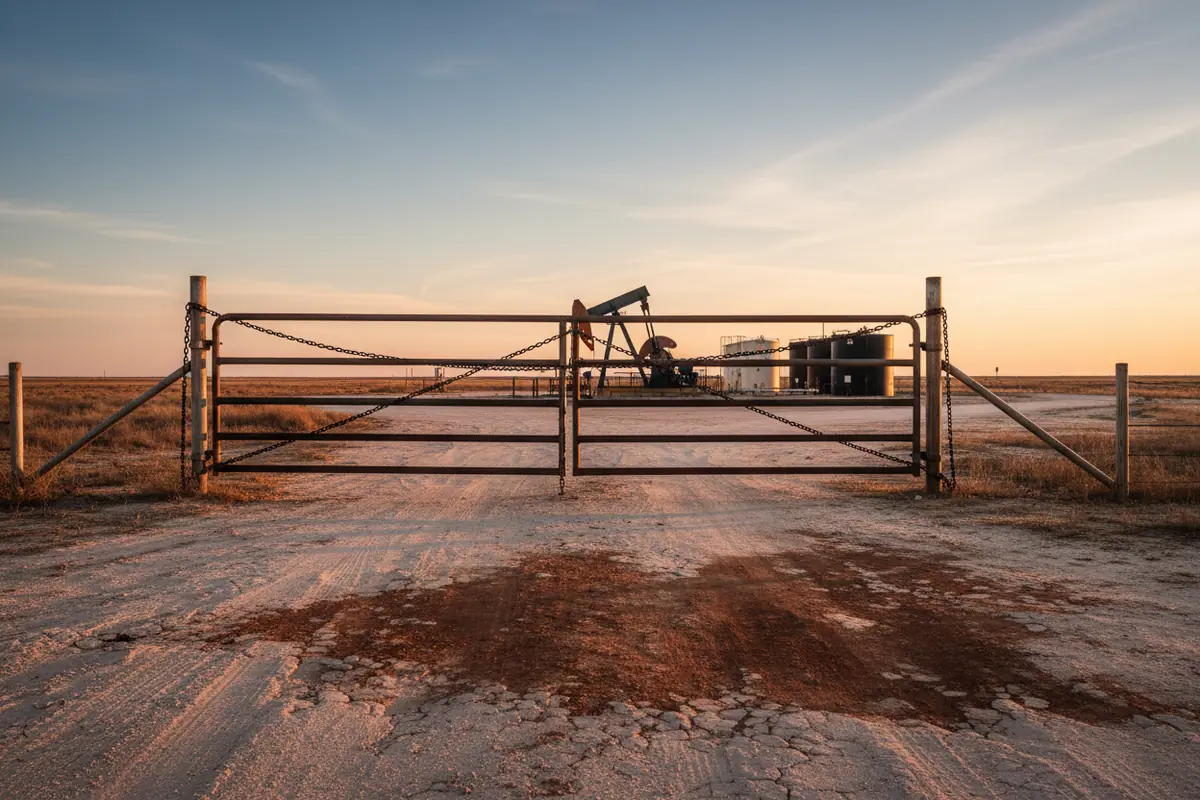
A pipe gate at an oilfield lease entrance with a pump jack visible beyond.
Immediate answer

Who may bring a claim after an oilfield accident: the employer, the other companies on site, the state's fault rule, and why federal safety law leaves it to the states.

On this page
  1. What Determines Whether You Can Bring a Claim
  2. Federal Workplace Safety Law and What It Does Not Cover
  3. Third-Party Claims: When Someone Other Than Your Employer May Be Responsible
  4. How Your Share of Fault Can Affect a Third-Party Claim
  5. Wrongful Death Claims When an Oilfield Accident Is Fatal
  6. Records and Information That Usually Matter in an Oilfield Injury Case
  7. Frequently asked questions
  8. Sources

If you were hurt at an oil or gas site, or lost a family member there, who may bring a claim usually turns on a few facts: who employed the worker, which other companies were on the location and what each controlled, the state where it happened, and the date.

Most people facing this question are dealing with more than one problem at once. There are hospital bills, missed paychecks, and a site where several companies' crews worked side by side, so it is hard to tell who answers for what. A spouse or parent may be sitting at a kitchen table, trying to understand whether the family has any path at all, while the companies involved already have people who handle these things every day.

This page explains how the law sorts out who may bring a claim after an onshore oilfield accident. It covers the difference between a claim against the employer and a claim against another company, what federal safety law does and does not change, how a worker's own share of fault is treated in three different states, what happens when an accident is fatal, and which records tend to matter.

What Determines Whether You Can Bring a Claim

Eligibility here is not one test. It is a set of facts that decide which legal paths may be open, and the same accident can open different paths for different people.

The first fact is the employment relationship. A worker may be a direct employee of the well operator, an employee of a drilling or service contractor, an employee of a subcontractor hired by that contractor, or someone classified as working on their own. Those labels matter because the law usually treats a claim against your own employer differently from a claim against anyone else. The oilfield contractor injury setting is a common example: a contractor's hand may be hurt on a location owned and run by a different company.

The second fact is control. On a typical location, one company may own or lease the site, another may run the rig, others may supply equipment, chemicals or trucking. Who controlled the area, the work and the equipment involved can shape who may be answerable.

The third and fourth facts are the state and the date. State law decides most of these questions, and limitation periods, fault rules and damages rules differ from state to state. No single rule applies everywhere.

Two broad paths come out of these facts. A workers' compensation claim is a claim for benefits from the employer's system under that state's workers' compensation law. A third-party claim is a personal injury claim against someone other than the employer. A "third party," in this setting, means a company, contractor, equipment manufacturer or property owner that was not the worker's direct employer.

For an injured worker, this means the answer to "can I bring a claim" often depends on which company you are asking about. What many people weigh first is a simple list: every company that had a crew, a truck, a piece of equipment or a contract on that location.

Federal Workplace Safety Law and What It Does Not Cover

The federal Occupational Safety and Health Act sets the safety floor for workplaces, including oilfield work. According to OSHA's Worker Rights and Protections page, "Federal law gives you the right to work in a safe place," and "Your employer must keep the workplace free from known safety and health hazards." The same page lists rights that include safety training in a language you understand, safe machines, required safety equipment, protection from toxic chemicals, requesting an OSHA inspection, and getting copies of your medical records. It also says the Act "created OSHA, which sets and enforces protective workplace safety and health standards," and that employers must comply with the General Duty Clause, "which requires them to keep their workplaces free of serious recognized hazards."

That safety role is real, but it is separate from an injury claim. Section 653(b)(4) of Title 29 of the United States Code, 29 U.S.C. § 653(b)(4), says:

"Nothing in this chapter shall be construed to supersede or in any manner affect any workmen's compensation law or to enlarge or diminish or affect in any other manner the common law or statutory rights, duties, or liabilities of employers and employees under any law with respect to injuries, diseases, or death of employees arising out of, or in the course of, employment."

In plain words, the federal safety law leaves the injury-claim rules where it found them. It does not replace a state's workers' compensation system, and it does not add to or take away from the rights and duties employers and employees already have under other law for on-the-job injuries. The words "death of employees" mean the same is true when an accident is fatal.

Workers sometimes assume that because OSHA covers their job site, a federal rule governs their injury. The text above points the other way. Who is covered by workers' compensation, what benefits exist and how those claims work are set by each state, and those rules differ.

For an injured worker or a family, this makes the state where the accident happened the starting point. An OSHA inspection or citation is not itself a claim, but it can still matter as evidence, a point the OSHA, CSB and PHMSA records guide covers.

Third-Party Claims: When Someone Other Than Your Employer May Be Responsible

For many oilfield workers, the company that signs the paycheck is not the company that ran the rig, owned the site or built the equipment that failed. That is why a claim against another company can matter so much. Such a claim is usually a negligence claim. Negligence asks four things: whether the company owed the injured person a duty of care, whether it breached that duty, whether the breach caused the injury, and what harm resulted. Each is a question the facts decide.

Two kinds of third-party claims come up often on oilfield locations. Premises liability is the duty a property owner or operator owes to people who are lawfully on its site, such as a duty concerning hazards on the location it controls. Product liability is the legal theory that a manufacturer or seller of defective equipment may be responsible for injuries the defect causes. Texas's proportionate responsibility chapter, for example, counts harm caused "by negligent act or omission, by any defective or unreasonably dangerous product, by other conduct or activity that violates an applicable legal standard, or by any combination of these," as section 33.003 of the Texas Civil Practice and Remedies Code puts it.

The categories of companies that may be involved on an onshore location include well operators, drilling contractors, equipment manufacturers, chemical suppliers, and other subcontractors and service companies. Naming a category is not a finding against anyone. An accident, even a serious one, does not by itself show that any company was at fault or that any piece of equipment was defective.

Damages in a third-party claim are the losses the applicable state's law recognizes. Washington's statute, for instance, speaks of "compensatory damages for an injury," and which losses count, and how they are measured, is set by each state's law.

What this means in practice: the same accident may support both a workers' compensation claim and a separate claim against another company, depending on who was involved and what each controlled. Many families find it useful to gather what they already know about the companies present: names on hard hats, trucks and paperwork, and who directed the work that day. The broader oilfield and energy legal services overview describes these site relationships further.

How Your Share of Fault Can Affect a Third-Party Claim

One of the hardest worries for an injured worker is the thought, "Maybe I did something wrong." States answer that worry very differently, and the difference can decide whether a claim against another company goes anywhere.

Comparative fault is a rule that reduces an injured person's damages by their own share of responsibility. Contributory negligence is a different rule: where it applies, an injured person's own negligence, once proven, can bar recovery altogether.

Washington follows a pure comparative approach. Under section 4.22.005 of the Revised Code of Washington, in an action based on fault, "any contributory fault chargeable to the claimant diminishes proportionately the amount awarded as compensatory damages for an injury attributable to the claimant's contributory fault, but does not bar recovery." That is Washington's rule only.

Texas uses a cutoff. Under section 33.001 of the Texas Civil Practice and Remedies Code, in an action to which the chapter applies, "a claimant may not recover damages if his percentage of responsibility is greater than 50 percent." If the claimant is not barred, section 33.012 reduces the damages by the claimant's percentage of responsibility, and further by the amounts of any settlements. The chapter itself lists actions it does not apply to, including an action to collect workers' compensation benefits under Texas's workers' compensation laws. That is Texas's rule only; the Texas oilfield accident claims page covers it in more depth.

Virginia keeps contributory negligence. In a February 4, 2021 opinion, AlBritton v. Commonwealth of Virginia, Record No. 191030, the Supreme Court of Virginia stated that "contributory negligence, when proven, is an absolute bar to recovery on a simple negligence claim." That is Virginia's rule only.

The same facts, with the same share of fault, can lead to very different results depending on which state's rule applies, and the rule in the state where the accident happened generally governs. A person in this position may weigh which state's law applies and how the evidence on fault might be read under it. If it would help to talk through how a fault rule fits what happened at your site, you can request a case evaluation.

Wrongful Death Claims When an Oilfield Accident Is Fatal

When a worker does not survive, the question of who may bring a claim passes to the family, and the answer comes from state law.

A wrongful death claim is a claim brought by surviving family members, or by someone acting for them, when a death results from another party's legally recognized wrongful conduct. Each state's wrongful death law sets who may bring the claim, which losses the law recognizes, and the time limit to file. Those rules differ from state to state.

A limitation period, often called a statute of limitations, is the time within which a claim must be filed. Each state sets its own periods, including when they start to run and what exceptions apply, and only that state's text answers the question for a particular death.

The loss changes who brings the claim, not what has to be shown. The family's claim rests on the same negligence elements described in the third-party section above, and a fatal accident does not by itself establish that anyone was at fault.

For a grieving family, the state where the accident happened determines who may bring the claim and what losses the law recognizes. Families often start with two facts they can pin down: the state where the location sat, and the names of the companies working there that day. The oilfield accident lawyer overview describes how fatal cases fit within oilfield claims more broadly.

Records and Information That Usually Matter in an Oilfield Injury Case

Because several companies often share one location, the records in an oilfield case are usually spread across several hands. No single file tells the whole story.

If you were hurt, the records that usually matter include incident and accident reports, medical records, photographs and video of the scene, equipment maintenance and inspection logs, the contracts between the companies on the location, and the names of witnesses. Government safety records can matter too. OSHA's Worker Rights and Protections page lists the right to "Report an injury or illness, and get copies of your medical records," to "Review records of work-related injuries and illnesses," and to "See results of tests taken to find workplace hazards," and it points to tools for viewing OSHA investigation and inspection data.

Which of these records exist, and who holds them, depends on the specific accident and the companies involved. An operator may hold one set, a contractor another, an equipment supplier a third. A report written by one company reflects that company's account; it does not by itself establish what caused an injury.

For an injured worker, the facts that show who controlled what are often found in contracts and company records, not just in the accident report. A person may weigh which records are likely to exist and where they sit, and a conversation with our attorney can cover which kinds of records tend to bear on control and fault in a case like this.

Free case evaluation

No Fee Unless We Win Your Case

A free case evaluation is how it starts. Tell us what happened, and we’ll help you understand your options. You pay no fee unless we win your case.

Oilfield Injury Claims Authority

How it works

  1. Call us or request a free case evaluationTell us what happened, in your own words.
  2. Talk through your caseYour options, and what your case may be worth.
  3. No fee unless we winYou pay no attorney fee unless we win your case.
Free case evaluation

Tell Us What Happened

Frequently asked questions

Does it matter which state the oilfield accident happened in?

Yes, a great deal. Workers' compensation, fault rules, damages and filing deadlines are set by state law. Washington reduces damages for a claimant's fault without barring recovery, Texas bars recovery above 50 percent responsibility, and Virginia treats proven contributory negligence as an absolute bar. The location of the site, not the worker's home, is usually the first question.

Can a family bring a claim if a worker was killed in an oilfield accident?

A family may have a wrongful death claim under the law of the state where the accident happened. That state decides which relatives may bring it, which losses count, and the filing deadline. The family steps into the same questions a living worker would face: which company controlled what, and what the evidence shows about duty, breach and causation.

Does OSHA coverage mean a worker can sue under federal law for an oilfield injury?

The federal safety law says it does not supersede or affect any workers' compensation law, and does not enlarge or diminish the rights and duties of employers and employees for workplace injuries. OSHA's role is safety standards and enforcement. An inspection record may still be useful evidence, but the injury claim itself runs through state law.

What if the injured worker was partly at fault for the accident?

Partial fault does not end the question in every state. Washington's statute reduces the award proportionately and does not bar recovery. Texas allows recovery only up to 50 percent responsibility, reduced by that share. Virginia's high court has said proven contributory negligence is an absolute bar. Fault is also usually disputed, so who is assigned what share depends on the evidence.

Who besides the direct employer might be responsible after an oilfield accident?

Depending on the facts, the categories include well operators, drilling contractors, equipment manufacturers, chemical suppliers and other subcontractors. Whether any of them is answerable depends on what each controlled and what the evidence shows. Texas's statute even lets a defendant designate a "responsible third party," showing how many companies a single case can draw in.

How long does a person have to file a claim after an oilfield accident?

Each state sets its own limitation periods, including when the clock starts and what exceptions apply, and wrongful death claims can carry their own periods. No single deadline applies everywhere, and the answer for a given accident comes from the statute of the state where it happened.