Skip to content

Guide 02 of 18

Records and Evidence After an Oilfield Accident

National · laws differ by state · Updated November 11, 2026

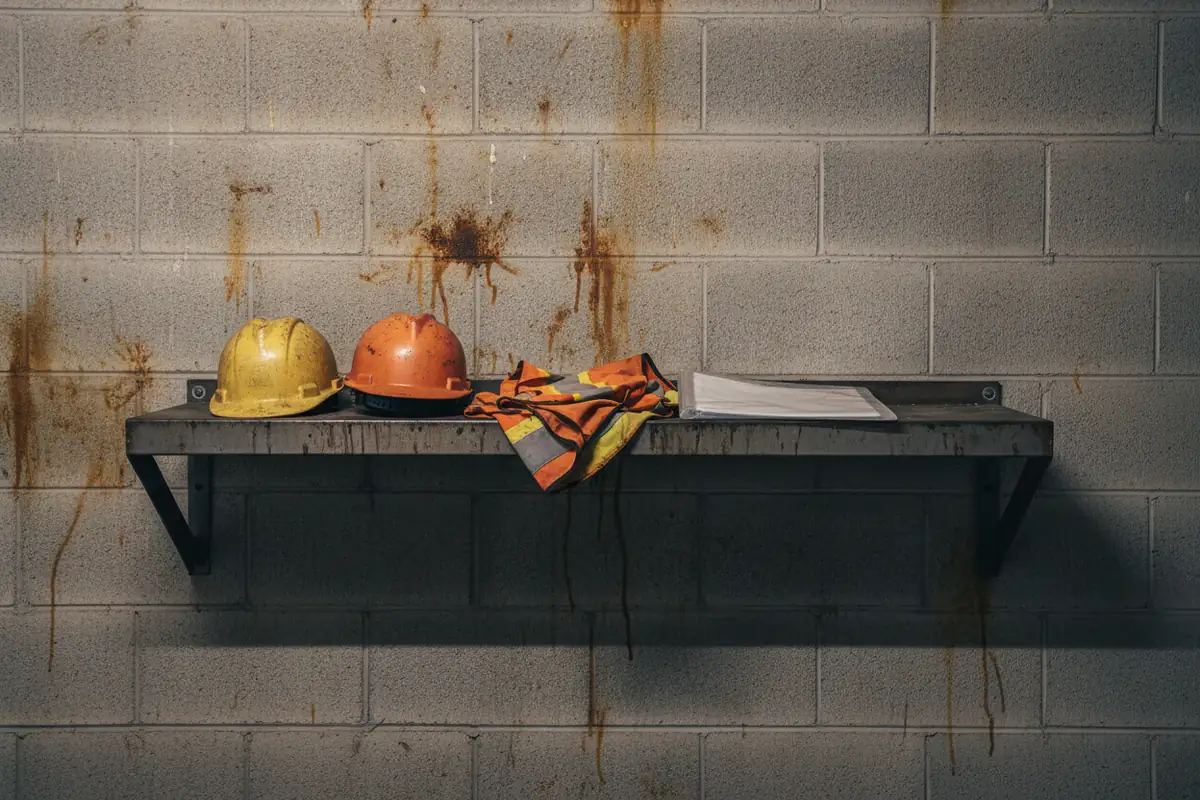
A wellsite tool-room shelf holding blank document sleeves and safety gear.
Short answer

The eight records oilfield injury claims often turn on, who holds each one, OSHA's records rights, safety data sheets and the PSM contractor injury log.

On this page
  1. What Records Usually Matter in an Oilfield Accident Claim
  2. If You Are Wondering Who Has the Records: Official Sources and Record Holders
  3. Why the Incident Report Is Often the First Document a Claim Examines
  4. If the Machine Failed, These Records May Show Whether the Problem Was Known
  5. What the Government's Investigation File May Contain — and How to Request It
  6. If a Chemical Was Involved: Labels, Safety Data Sheets, and What They Document
  7. Keeping Your Own Records Safe — and the Legal Side of Evidence Preservation
  8. What This Tool Does and Does Not Determine
  9. Frequently asked questions
  10. Sources

After an oilfield accident, the records that usually matter are the incident report, job safety analyses and permits, daily drilling or work reports, equipment maintenance and inspection records, photos and video, witness names, pay records and medical records. Most are held by the employer or operator. Some are held by the worker, and some by OSHA.

If you were hurt on a rig, a well pad or at a processing site, or if someone in your family was badly hurt or killed there, the paperwork can feel like one more weight on top of medical bills, missed paychecks and unanswered questions about what went wrong. Most people facing this process have never seen a job safety analysis or a daily drilling report, and they do not know which company holds what. This guide walks through each record in turn: what it is, where it comes from, and why it can matter.

What Records Usually Matter in an Oilfield Accident Claim

A claim of this kind usually asks four questions. Did someone owe the worker a duty of care? Was that duty breached? Did the breach cause the injury? What harm followed? The records below are often the only written account, made at the time, of the conditions before and during the accident. For an injured worker or a family, that means these papers often carry the answers to those four questions.

  • The incident report is the employer's or operator's first written account of what happened, who was involved and what conditions were noted. It can matter because it records what the company observed while events were fresh.
  • Job safety analyses and work permits record the hazards and conditions that were identified before the work began. They can matter because they show what risks were recognized ahead of time.
  • Daily drilling or work reports are running logs of operations, equipment status and the personnel on site. They can matter because they place people and machinery at a specific time.
  • Equipment maintenance and inspection records show the service history and known condition of the machinery involved. They can matter because they bear on whether a problem was known before the accident.
  • Photos and video give a visual record of the scene, the equipment and the conditions at or near the time of the accident. They can matter because they show conditions that may later change.
  • Witness names and contact information identify the people who saw the conditions or the event itself. They can matter because witnesses can describe what no document captured.
  • Pay records and employment records establish the worker's role, hours and earnings. They can matter because they bear on the worker's job duties and on lost earnings.
  • Medical records document the nature and extent of the injuries and the treatment received. They can matter because they connect the accident to the harm that followed.

If you are sorting through this list, some of these records may already be in a drawer or on a phone, while others sit in a company's files. Knowing which is which is often the first thing an attorney conversation helps clarify. The site's overview of an oilfield accident lawyer covers the broader picture of these claims.

If You Are Wondering Who Has the Records: Official Sources and Record Holders

This resource is built from official federal sources, and each one is used only for what its own text says.

OSHA's Worker Rights and Protections page states that a worker has the right to "report an injury or illness, and get copies of your medical records," to "review records of work-related injuries and illnesses," and to "see results of tests taken to find workplace hazards." The same page offers tools to check an employer's OSHA inspection history and to view OSHA investigations and inspections, along with injury, illness and fatality data.

OSHA's Hazard Communication page states that "all employers with hazardous chemicals in their workplaces must have labels and safety data sheets for their exposed workers, and train them to handle the chemicals appropriately."

If you worked at a site that handled highly hazardous chemicals, a federal rule known as process safety management, or PSM, may also apply. PSM is the federal standard at 29 C.F.R. § 1910.119, and it exists for "preventing or minimizing the consequences of catastrophic releases of toxic, reactive, flammable, or explosive chemicals." For a contract worker, one part of it can be directly relevant: under 29 C.F.R. § 1910.119(h)(2), the host employer "shall maintain a contract employee injury and illness log related to the contractor's work in process areas." Where a worksite is covered by PSM, that log is one record a claim may ask about.

Who holds each record matters as much as what the record says. The incident report, JSAs, permits, daily logs and maintenance records are generally held by the employer or the operator, and they are not automatically handed to an injured worker or a family. Medical records are held by the treating doctors and hospitals. Photos, messages and pay stubs are often already in the worker's own hands. For a family, this often means three separate stacks of records with three separate keepers, and the records that bear most on what the company knew are usually the ones not at home. Which of those can be reached, and how, is one of the questions an attorney can help sort out.

Why the Incident Report Is Often the First Document a Claim Examines

If you are trying to learn what the company itself said happened, the incident report is usually where that answer starts. It is commonly prepared by the employer or by the operator's safety staff soon after the event.

An incident report typically contains:

  • the date, time and location of the event;
  • the names of the people involved;
  • a description of what happened;
  • the conditions that were noted;
  • the witnesses who were identified; and
  • any immediate corrective actions taken.

What it may show is the company's own account of the conditions and the sequence of events, written close to the moment. What it may not show matters just as much. The report reflects what its author knew, observed or chose to write down. A missing detail, such as an unnamed witness or an unmentioned equipment problem, can be as significant as anything the report includes. The report is also one party's account, so it does not settle what caused an injury.

Workers and families often ask for a copy. Whether a worker can get one may depend on their employment status, such as employee or contractor, and on the law that applies. That is one reason the same report may read very differently to a family than it does to the company that wrote it, and why it is usually compared against the other records on this page.

If the Machine Failed, These Records May Show Whether the Problem Was Known

When machinery fails and a worker is hurt, the questions often turn to the paper trail behind that machine. The equipment records usually involved include:

  • maintenance logs;
  • inspection certificates;
  • repair orders; and
  • the manufacturer's maintenance schedules for the equipment involved.

Together, these records may show whether the equipment was serviced on schedule, whether defects were noted and addressed, and who performed the work.

If you are asking who could be responsible for a failed machine, two legal theories often come up. Under product liability, a manufacturer, seller or distributor of a product may be held responsible if the product was defective and that defect caused an injury. Under premises liability, the owner or operator of a property may be responsible for injuries caused by unsafe conditions on that property. For an injured worker, this can mean that more than one company, beyond the employer, may be part of the picture.

In a product liability claim, the equipment's design specifications and any safety notice issued for it may also be relevant. A recall or notice appears only as the issuing agency's own record states it, and a recall is not a finding that the product injured anyone. An equipment failure does not by itself prove a defect, and a gap in a maintenance log does not by itself prove anyone's fault. Whether either theory is met depends on the facts.

Because the machine itself usually stays with the company, injured workers and families often write down the type of equipment, any visible markings and any serial or unit numbers they saw, and keep photos of it. Those details can help an attorney identify which companies made, sold or maintained the equipment. The site's page on oilfield equipment failure injuries explains what the law asks in these cases.

What the Government's Investigation File May Contain — and How to Request It

For a family after a death, or a worker after a hospitalization, an outside agency's file can feel like the one account not written by the company. OSHA's Worker Rights and Protections page includes a tool to "view OSHA investigation/inspections; injury, illness and fatality data," and another to "check your employer's OSHA inspection history." These tools are a public starting point for learning whether an inspection took place at a worksite.

Beyond those public tools, people sometimes ask a federal agency for its records under the Freedom of Information Act. The Freedom of Information Act, or FOIA, is the federal law that gives the public the right to request records from federal agencies. What an agency releases, and in what form, depends on that agency's own process and on the file itself.

Two points help in reading anything an agency produces. First, an inspection result or a citation is an agency's administrative action. It is not a court judgment, and it does not establish civil liability. Second, the absence of a citation does not show that a worksite was safe, and the presence of one does not show that a violation caused a particular injury. Those are separate factual questions.

The site's guide to fatal oilfield accidents describes how investigations fit alongside a family's own questions after a death.

If a Chemical Was Involved: Labels, Safety Data Sheets, and What They Document

OSHA's Hazard Communication page states that chemical manufacturers and importers must evaluate the hazards of the chemicals they produce or import and "prepare labels and safety data sheets." It also states that employers with hazardous chemicals in the workplace must have labels and safety data sheets for exposed workers and must train those workers to handle the chemicals appropriately.

If you were exposed to drilling fluids, a release, a fire or a spill, the safety data sheet, or SDS, for the substance is the document that describes its identity and hazards. OSHA's page says safety data sheets now follow "a specified 16-section format," and describes labels that carry "a harmonized signal word, pictogram, and hazard statement for each hazard class and category," along with precautionary statements. In practice, the SDS may show what hazards were known and what precautions were described, and the worker's training records may sit alongside it.

What matters for an exposed worker is the gap, if any, between what the SDS describes and what was actually provided or done at the worksite. That is a factual question, and whether any such difference amounts to a breach of duty depends on the facts of the case. Workers who were exposed often note the product name or the label they remember, since that name is how the matching SDS is usually identified, and it gives an attorney a starting point for comparing the paperwork with what happened.

If you were hurt, the records that are usually already within your reach include:

  • copies of medical records and bills;
  • photos and video of the scene and of the injuries;
  • the names and contact details of witnesses;
  • pay stubs and other pay records; and
  • texts, emails or other written messages about the accident.

Injured workers and families often keep these in one place, along with a short written timeline of the events.

Records in the worker's own possession are generally within the worker's control. Records held by employers and operators are not, and whether they stay intact may depend on a formal legal step. The site's guide to preserving records for your review covers how workers and families keep their own records intact. The site's evidence preservation page covers the legal side of keeping evidence that others hold.

Spoliation is the destruction or alteration of evidence that a party knew or should have known was relevant to a legal claim. A spoliation letter is a written notice asking another party to keep that evidence. When such a letter may fit, and what it can ask for, is a legal question that turns on the situation. If questions like these are on your mind, you may want to consider requesting a case evaluation, which can be a place to talk through which records are held by others and what preserving them can involve.

What This Tool Does and Does Not Determine

For a worker or family holding a stack of paperwork, this page is a map of what the records are and why each may be relevant, not an answer about the case itself. It does not determine fault, liability, a deadline or the value of a claim. Whether any record described here supports a legal claim depends on the facts of the specific case.

Three sets of rules shape every claim, and all three differ from state to state. No state's rule is the rule everywhere.

The first is the statute of limitations, the law that sets the time limit within which a legal claim must be filed. After that period expires, the right to file is generally lost. Limitation periods vary by state and by the type of claim.

The second is comparative fault, the framework that allocates responsibility among the parties based on their respective shares of fault.

The third is damages rules, which govern what categories of loss the law may allow and when.

Where a worker died, the family's claim may be one for wrongful death, a legal claim brought by the family or estate of a person who died as a result of another party's alleged wrongful act or negligence. Who may bring it is set by each state's law.

The questions this page leaves open are the ones families and workers often want answered most: which state's law applies, which companies were involved, and what the records actually show. The site's page on who can bring a claim explains how those questions are framed.

Free case evaluation

No Fee Unless We Win Your Case

A free case evaluation is how it starts. Tell us what happened, and we’ll help you understand your options. You pay no fee unless we win your case.

Oilfield Injury Claims Authority

How it works

  1. Call us or request a free case evaluationTell us what happened, in your own words.
  2. Talk through your caseYour options, and what your case may be worth.
  3. No fee unless we winYou pay no attorney fee unless we win your case.
Free case evaluation

Tell Us What Happened

Frequently asked questions

What is the incident report and why does it matter?

The incident report is the employer's or operator's written account of the accident. Because it is one party's account and reflects what its author chose to record, it is often read next to photos, witness accounts and daily logs rather than on its own, and gaps in it can be as telling as what it says.

Can an injured worker get copies of their own medical records?

Yes. OSHA's worker rights page lists the right to report an injury or illness and to get copies of your medical records. Treating doctors and hospitals hold those records. Medical records are often the main link between what happened on site and the injuries that followed.

What is a safety data sheet and when does it matter in an oilfield accident claim?

A safety data sheet is a document that, under OSHA's Hazard Communication Standard, conveys a chemical's hazard information in a 16-section format. Employers with hazardous chemicals must have labels and safety data sheets for exposed workers. In an exposure case, the SDS may show what hazards were known for the substance involved.

What is the difference between an OSHA citation and a finding of liability?

An OSHA citation is an agency's administrative action. It is not a court judgment, and it does not establish civil liability. Whether a safety problem contributed to an injury, and whether that supports a legal claim, are separate questions that depend on the facts and on state law.

What is process safety management and what records does it require?

Process safety management is the federal standard at 29 C.F.R. § 1910.119 for preventing or minimizing catastrophic releases of toxic, reactive, flammable or explosive chemicals. At a covered process, the host employer must maintain a log of contract employee injuries and illnesses related to the contractor's work in process areas. Contract workers' claims sometimes ask about that log.

What is a statute of limitations and how does it affect an oilfield accident claim?

A statute of limitations sets the time limit within which a legal claim must be filed. After that period expires, the right to file is generally lost. The period differs by state and by the type of claim, and the period that applies depends on the facts and on which state's law governs.

What does comparative fault mean in an oilfield accident case?

Comparative fault is the framework that divides responsibility among the parties according to their shares of fault. States apply it differently, and no single rule governs everywhere. It is one reason the same records can carry different weight depending on where the accident happened.

Sources

Statutes, regulations and court sources

  1. 0129 C.F.R. § 1910.119, Process safety management of highly hazardous chemicals (eCFR) · Electronic Code of Federal Regulations

Other sources

  1. 02Worker Rights and Protections, Occupational Safety and Health Administration · Occupational Safety and Health Administration
  2. 03Hazard Communication - Overview, Occupational Safety and Health Administration · Occupational Safety and Health Administration