
Skip to content

Guide 05 of 18

How a Lawyer Evaluates an Oilfield Accident Case

National · laws differ by state · Updated November 11, 2026

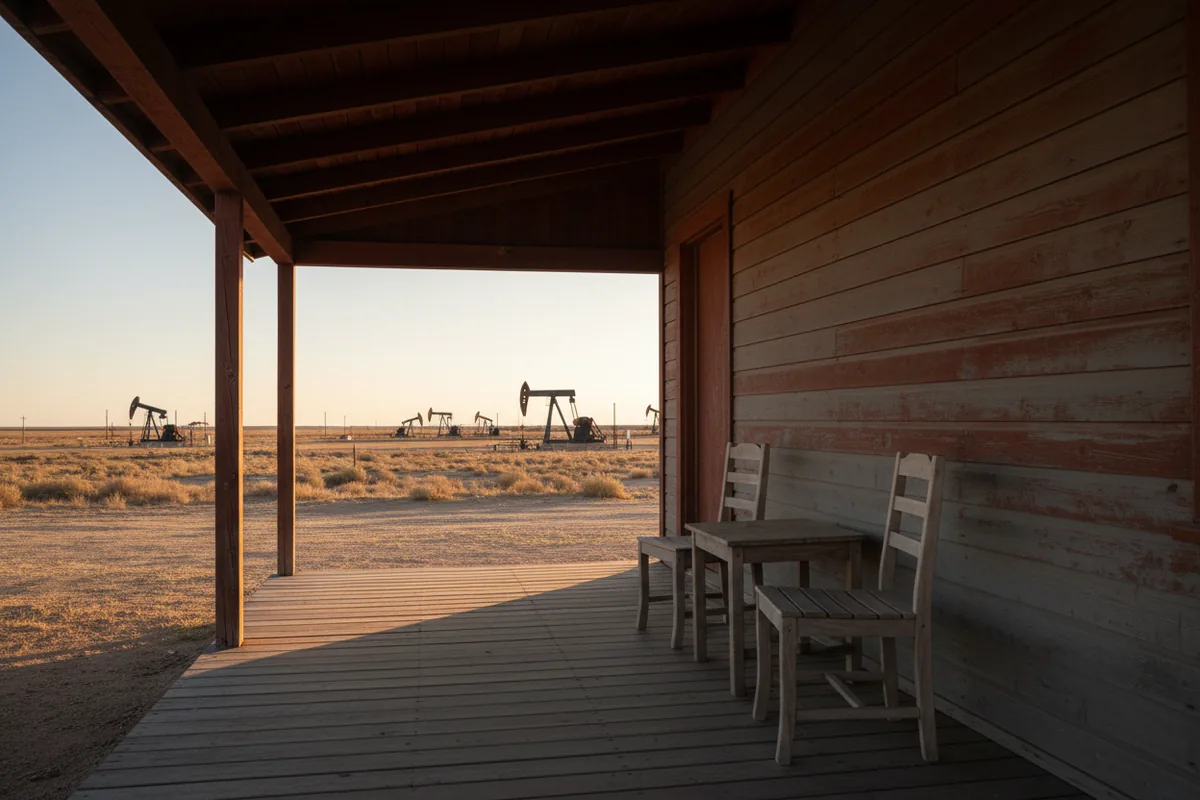
Two wooden chairs on the shaded porch of a small oil lease field office.
Immediate answer

An oilfield case evaluation covers the state, date, site, employer, other companies, equipment and comp claim. It does not decide fault or promise representation.

On this page
  1. What a Case Evaluation Can and Cannot Tell You
  2. Why the State, Date and Companies on Location Come First
  3. Does Workers' Compensation Rule Out a Third-Party Claim?
  4. How the Equipment and the Worksite Shape Your Options
  5. Why Filing Deadlines Differ from State to State
  6. When You Are Told the Accident Was Partly Your Fault
  7. Questions Worth Asking Before Your First Conversation with a Lawyer
  8. Frequently asked questions
  9. Sources

If you were hurt at a well site, on a rig or at a refinery, a case evaluation is a conversation with an attorney about what happened: where and when, the work underway, who employed you, which other companies were there, the equipment, your treatment and any workers' compensation claim. It does not decide fault, value a claim or promise representation.

Most people facing this moment are recovering from a serious injury, or sitting with a family member's death, while a workers' compensation adjuster, a supervisor and several companies all seem to have a different account of what happened on location. You may be wondering what a lawyer will ask, whether you have the right papers, and whether reaching out commits you to anything. This guide walks through the facts an oilfield or refinery injury evaluation usually turns on, why each one matters in law, and what an evaluation can and cannot tell anyone.

This page focuses on onshore oilfield and refinery work. Injuries offshore or on vessels can fall under federal maritime laws such as the Jones Act or the Longshore and Harbor Workers' Compensation Act, which work differently and are outside the scope of this guide.

What a Case Evaluation Can and Cannot Tell You

A case evaluation is a conversation about the facts of an accident: what happened, where, to whom, and who else was involved.

That matters when you are already carrying medical bills, missed shifts and uncertainty. Some people put off reaching out because they think they need to prove their case first. Others hope the first conversation will end with a clear answer. Neither picture is accurate. An evaluation gathers the facts so that the legal questions can be identified, and many of those questions depend on records and details that are not yet known.

An evaluation is also not legal advice about what you personally should do, and it is not a commitment by any attorney to take the matter. At this firm, representation begins only when an attorney expressly agrees to it, a point the site's guide to oilfield accident legal representation explains in more detail. What happens after a request is sent, step by step, is the subject of the site's guide on what happens after an inquiry.

Why the State, Date and Companies on Location Come First

An oilfield injury evaluation usually starts with five plain facts, because each one points to a different set of legal rules.

The first is the state where the accident happened. State law decides most oilfield injury claims, including the time limits, the rules for dividing fault and the rules for damages. The same accident can be treated quite differently from one state to the next, so the location is not a formality.

The second is the date. The date of the injury, or of a death, is generally where the time limits begin, and those limits differ by state.

The third is the site itself and the work being done at that moment: a drilling location, a completion or workover job, a production facility, a pipeline yard, a refinery unit. The task tells a lot about who controlled the work and the equipment.

The fourth is who employed the injured worker. On many locations that is not simple. A worker may be paid by a staffing company, assigned to a contractor, and working on a site owned or operated by someone else.

The fifth is which other companies were present or operating on location. Oilfield work often puts an operator, a drilling or service contractor, subcontractors and equipment suppliers side by side, and each one's role can matter later.

If you are not sure of every company name, that is common, and a conversation can still begin with what you do know. Getting ready for that first talk is covered in the site's guide to preparing for your first consultation.

Does Workers' Compensation Rule Out a Third-Party Claim?

Many injured workers ask whether accepting workers' compensation ends every other option. The answer turns on the fact that the law treats two kinds of claims as distinct.

A workers' compensation claim runs against the employer under the state's workers' compensation system. A third-party claim is a claim under state tort law (the law of civil wrongs that cause injury) against a company other than the employer. On an oilfield location, the categories that come up include a site owner or operator, a general contractor, another contractor on location, and the manufacturer of a piece of equipment. These are categories only. Naming one is not a finding that any company did anything wrong.

Federal workplace-safety law does not merge these tracks. The Occupational Safety and Health Act says so in 29 U.S.C. § 653(b)(4): "Nothing in this chapter shall be construed to supersede or in any manner affect any workmen's compensation law or to enlarge or diminish or affect in any other manner the common law or statutory rights, duties, or liabilities of employers and employees under any law with respect to injuries, diseases, or death of employees arising out of, or in the course of, employment."

In plain words, that federal law leaves state workers' compensation law, and the other rights and duties of employers and employees, as they were. That is part of why an evaluation looks at the employer track and the third-party track one at a time.

Whether any company other than the employer may be answerable depends on the facts and on the law of the state that applies. The site's guide to third-party liability explains what that kind of claim generally has to show.

How the Equipment and the Worksite Shape Your Options

What failed, and where, often decides which legal theories are even in play.

Equipment comes first: what it was, its make and model if known, its condition, whether it had been repaired or modified, and whether maintenance or inspection records exist. Prior incidents involving the same piece of equipment on that location can also matter.

Next is the worksite: the conditions at the time, such as lighting, walking surfaces, pressure systems, guarding, or the area around a unit or rig floor. Close behind is who directed the work. A crew following one company's procedures on another company's site raises different questions than a crew working alone.

Each of those facts can point to a different kind of claim. Product liability is a claim that a product, such as a tool, valve, line or piece of machinery, had a defect and that the defect caused the injury. Premises liability is a claim that the owner or operator of a property owed a duty about its condition and that a condition of the site caused the injury. Negligence more broadly asks whether someone failed to use reasonable care in how the work was done. The theories are not mutually exclusive, and an accident alone does not prove a defect or anyone's carelessness.

For an injured worker, this means the equipment and the site are often evidence in their own right. If you were hurt, the records that usually matter include medical records, photos and video of the site and equipment, the equipment or product itself where it was kept, incident and inspection reports, and witnesses' names. Whether a workers' compensation claim has already been filed is part of this picture too. For injuries such as head trauma, where symptoms can develop over time, the site's guide to oilfield brain injuries discusses the records involved.

Why Filing Deadlines Differ from State to State

A statute of limitations is a law that sets the deadline for filing a lawsuit. Once that deadline passes, a court can bar the claim no matter how strong it might otherwise have been. That is the reason the time limit is one of the first legal questions an evaluation raises.

There is no single national deadline for oilfield injury claims. Each state sets its own limitation periods, and they differ in length and in how they work. Identifying which state's law applies is therefore the first step toward knowing which deadline matters.

The clock generally starts on the date of the injury. Some states also apply a discovery rule, under which the period may begin when the injury, or its cause, was discovered or reasonably should have been discovered. Whether a discovery rule exists, and how it applies, depends on the state and the facts.

Claims after a death follow their own timetable. A wrongful-death claim is a claim brought on behalf of family members or an estate after someone dies because of another's wrongful conduct, and its deadline is separate from the deadline for an injury claim and also differs by state. Families facing that loss may find the site's guide on fatal oilfield accidents useful on how those claims sit beside workers' compensation.

Other deadlines can apply as well, including within the workers' compensation system, and they are set by state law. This page does not state any particular period, because the rule depends entirely on where the accident happened and on the facts. If a date is weighing on you, a conversation can focus on which state's law applies and which deadlines that law sets; you can request a case evaluation to talk it through.

When You Are Told the Accident Was Partly Your Fault

On a single oilfield location, an operator, a drilling or service contractor, a subcontractor and an equipment supplier may all have had a hand in the work. An evaluation tries to map which of them may have owed a duty to the injured worker and whether any of their conduct may have contributed to the accident. Both questions depend on the facts.

Most states use some form of comparative fault, a system that divides responsibility for an accident among the parties involved, sometimes including the injured person. Under that kind of system, the injured person's own share of fault may affect what the law allows them to recover.

States generally take one of three approaches. Pure comparative fault reduces what the law may allow in proportion to the injured person's share of responsibility, without cutting it off entirely. Modified comparative fault works similarly but bars recovery once the injured person's share reaches a threshold the state sets. Contributory negligence, used in some states, can bar recovery if the injured person was at fault at all.

For a worker who is told the accident was partly their own doing, that assertion is not the end of the question; it is one fact the applicable state's rule weighs. Depending on the state, the same share of fault could reduce a recovery, bar it, or matter very little. Which rule applies, and how it treats the facts, is part of what an evaluation identifies. It is not something any company's account decides.

Questions Worth Asking Before Your First Conversation with a Lawyer

A first conversation tends to go further when the person has already thought about a few practical matters. None of these need perfect answers.

Whether another lawyer is already involved is one of the first things a lawyer will ask, because it affects who can discuss the matter.

The status of any workers' compensation claim also comes up: whether one was filed, whether benefits were paid or denied, and what correspondence has arrived.

Records are another part of the conversation: medical records and the treatment so far, incident reports, photos, and witnesses' names. Describing a document you do not have in hand is still useful.

Whether you have signed anything related to the accident, such as a statement, a release or an insurance form, is also likely to be asked, along with roughly when.

The more clearly someone can describe what happened, who was present, and what has happened since, the more ground the conversation can cover. For questions you may want to put to an attorney in return, the site's list of questions to ask an attorney is a starting point.

Free case evaluation

No Fee Unless We Win Your Case

A free case evaluation is how it starts. Tell us what happened, and we’ll help you understand your options. You pay no fee unless we win your case.

Oilfield Injury Claims Authority

How it works

  1. Call us or request a free case evaluationTell us what happened, in your own words.
  2. Talk through your caseYour options, and what your case may be worth.
  3. No fee unless we winYou pay no attorney fee unless we win your case.
Free case evaluation

Tell Us What Happened

Frequently asked questions

What does a lawyer actually look at during an oilfield accident case evaluation?

The core facts are the state, the date, the site and task, the employer, the other companies on location, the equipment, treatment so far, any workers' compensation claim, and whether another lawyer is involved. Together they point to which theories and which state's law may apply. None of it settles fault.

Does a case evaluation mean the lawyer will take my case?

No. Whether a lawyer takes on a matter depends on the facts discussed and the law that applies, and at this firm representation begins only with an express agreement. The evaluation itself is a fact-gathering step, not a finding on fault or a claim's value.

Can I have a workers' compensation claim and still pursue a claim against another company?

In many situations the two can exist side by side, because they are legally distinct tracks. Workers' compensation runs against the employer; a third-party claim runs against another company under state tort law. Whether both apply in a given accident depends on the facts and the applicable state's law.

How do time limits work for oilfield accident claims?

Each state sets its own statutes of limitations. The period generally starts on the date of injury, and some states apply a discovery rule. Wrongful-death claims have separate deadlines. Because a missed deadline can bar a claim regardless of its merits, identifying the governing state comes early.

What if multiple companies were involved in the accident?

That is common on oilfield locations. The question becomes which companies may have owed a duty and whether their conduct may have contributed. The state's fault rule then decides how responsibility is divided. A company's presence on site does not, by itself, make it answerable.

What records matter when a lawyer evaluates an oilfield accident case?

Records that often matter include medical records, photos and video, incident and inspection reports, the equipment involved, and witnesses' names, along with any workers' compensation paperwork and anything signed after the accident. An evaluation is a conversation, so describing a record you do not have still helps.

Does it matter which state the accident happened in?

Yes. State law governs most oilfield injury claims, and limitation periods, fault rules and damages rules all differ by state. The same facts can be treated differently depending on where the accident happened, which is why location is one of the first facts discussed.

What is the difference between a product liability claim and a premises liability claim in an oilfield accident?

Product liability focuses on whether equipment had a defect that caused the injury. Premises liability focuses on whether a site owner or operator owed a duty about the site's condition and whether that condition caused the injury. Both can be raised by one accident; which the facts support is a separate question.